Personalized License Plates: How to Order, Costs & Rules
To get personalized license plates, you choose a message that fits your state’s character limit, check that it is available, submit an application, and pay the one-time and annual fees.
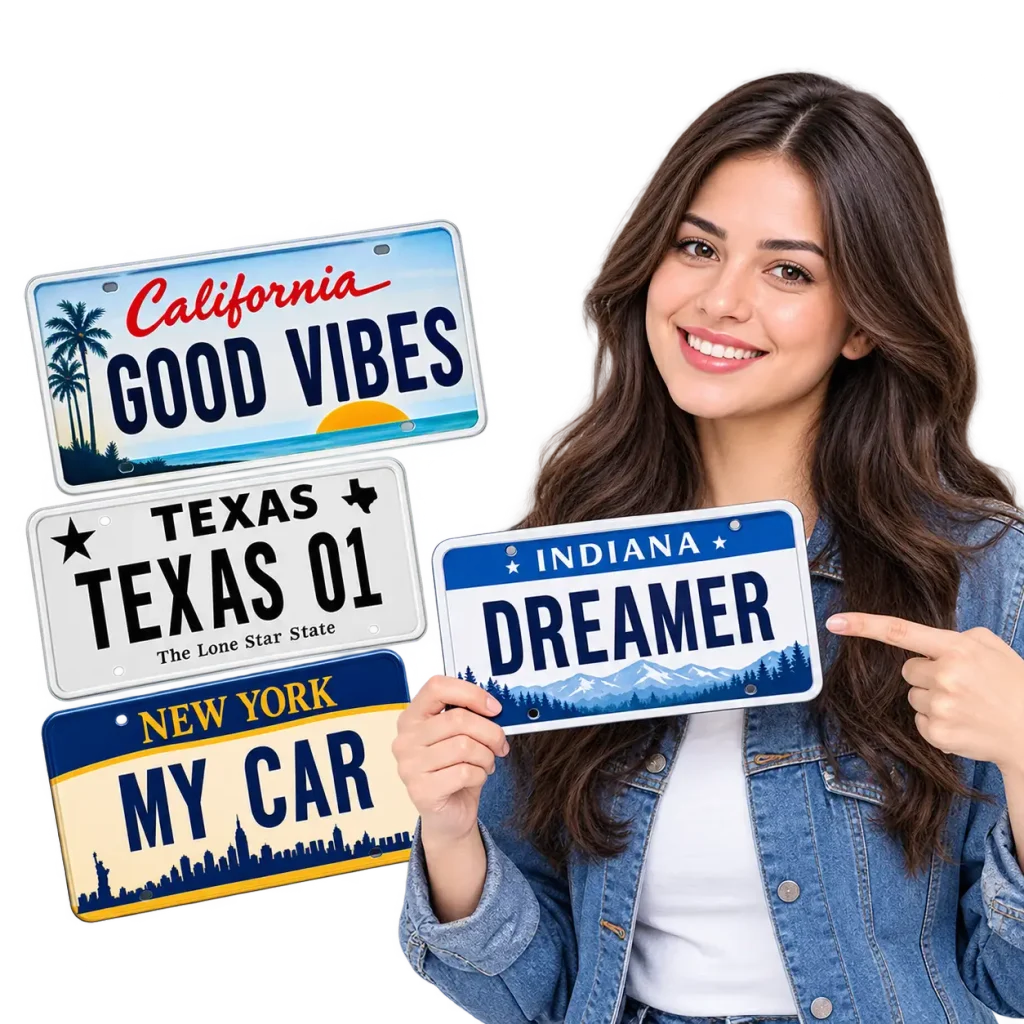
A good message can be taken, rejected, or delayed for reasons that are easy to avoid. This page explains what personalized plates are, how to order them step by step, what they cost in six large states, and how character limits and message rules work. It also covers how long delivery takes, how renewal works, and what to do when your first choice is denied.
What Are Personalized License Plates?
Personalized license plates are standard registration plates that carry a message you choose, such as a word, name, number combination, or short phrase. They are also called vanity plates, custom plates, or personalized number plates. The plate still works as your legal registration plate, so it must follow the same display and registration rules as a regular one.
Each state sets its own rules for which characters are allowed, how many you can use, and what messages are acceptable. Some states let you add a background design or a special interest logo. Others offer personalization only on certain plate types.
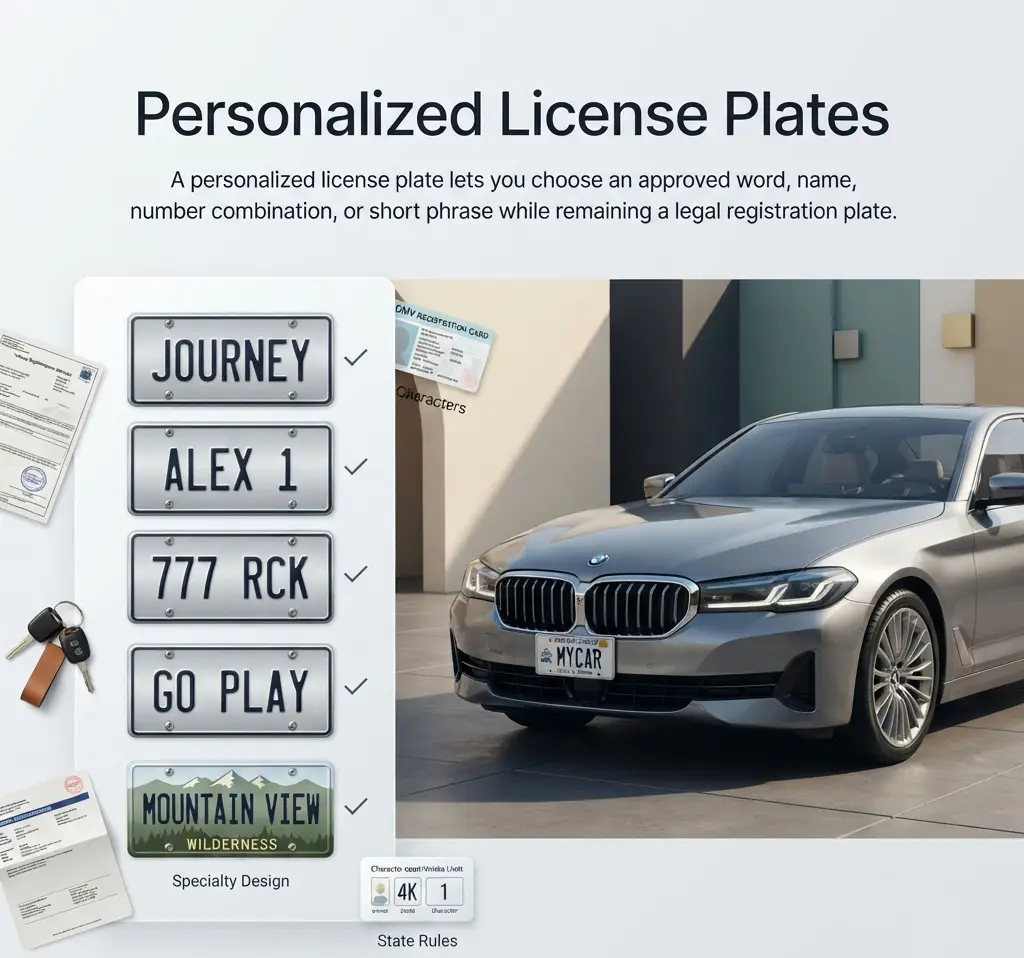
Personalized plates are different from sequential plates, which the state assigns in number order, and from specialty plates that support a cause or organization. You can often combine the two, such as a personalized message on a special interest design. Fees stack when you do.
How to Order Personalized License Plates Step by Step
The steps are similar across states, though the websites look different. Follow this order to avoid wasted time. Most rejected orders skip the availability check in step three.
- Pick your message. Write down several choices, since your first idea may be taken or refused.
- Check the character limit. Count letters, numbers, and any spaces or hyphens your state allows.
- Check availability. Use your state’s online plate lookup, if it has one, before you apply.
- Choose a plate design. Decide whether you want a standard plate, a background design, or a special interest plate.
- Complete the application. Order online, by mail, by phone, or in person, depending on what your state offers.
- Pay the fees. Expect an initial charge, an annual fee, or both.
- Keep your current plates. Many states ask you to keep your existing plates until the new ones arrive.
- Wait for delivery or pickup. The timeline can range from a few weeks to a few months.
- Install the plates and update your registration. Follow your state’s instructions for the old plates.
Check your state’s official page before you start. Some states will not accept an order if your registration is about to expire, which can reset the whole process. Look at your registration expiry date before you pick a message.
Personalized Plate Costs by State
Personalized plates cost more than standard plates in every state checked for this page. The table below shows the published figures. Use it to compare, then confirm the current price on your own state’s site. This is typically ordered alongside a vehicle registration renewal.
| State | Published cost | Notes |
|---|---|---|
| California | Extra fees apply; amounts are listed on the application form | The DMV page directs buyers to the REG 17 form for fees |
| Texas | My Plates Select: $150 for 1 year with 6 characters or fewer, $195 for 7 letters | State-sponsored personalized plates start from $70 for 1 year |
| Florida | Additional $15 annual fee for each personalized plate | Applied on top of regular registration costs |
| New York | $60.00 initial fee plus $31.25 annual fee for passenger vehicles | Motorcycles are $35.00 initial and $18.75 annual |
| Pennsylvania | See the Bureau of Motor Vehicles schedule of fees | Fee form is MV-70S |
| Ohio | $10.00 BMV fee for personalized plates | Contribution fees vary by design, from $0 to $50 or more |
Texas lists extra one-time charges for changes. A background restyle costs $50, and an upgrade to an embossed design costs $75. Longer terms can lower the yearly cost, since the multi-year prices on the Texas plate site are discounted compared with the one-year price.
The cheapest option is not always the best. A low upfront fee with a high annual charge can cost more over time. Add up the total for the number of years you expect to keep the plate.
How Many Characters Can You Use?
Most states allow between five and eight characters, depending on the plate type. Standard passenger plates usually have the highest limit, while motorcycle plates and plates with logos have fewer. Spaces often count as characters.
The published limits show the range. New York allows 2 to 8 characters on a standard plate and 2 to 6 on a motorcycle plate, with each space counting as one character. Pennsylvania allows up to seven letters or numbers on standard plates and five on motorcycles, with either one hyphen or one space but not both. Ohio requires at least 4 characters and fewer than 8 for personalized plates, with no dashes, symbols, or punctuation marks. Check the DMV fee calculator to estimate the added cost.
Texas allows up to seven characters on most My Plates Select designs and up to six on state-sponsored plates. It also offers special characters such as dashes, periods, hearts, and spaces on some designs. If your message includes a number that looks like a letter, check the substitution rules before you pay.
What Messages Are Not Allowed?
Every state rejects messages it considers offensive, misleading, or confusing. The review is done by state staff, and the decision is usually final unless the state offers an appeal. A message that seems harmless to you may be refused if it can be read another way.
Common reasons for rejection include:
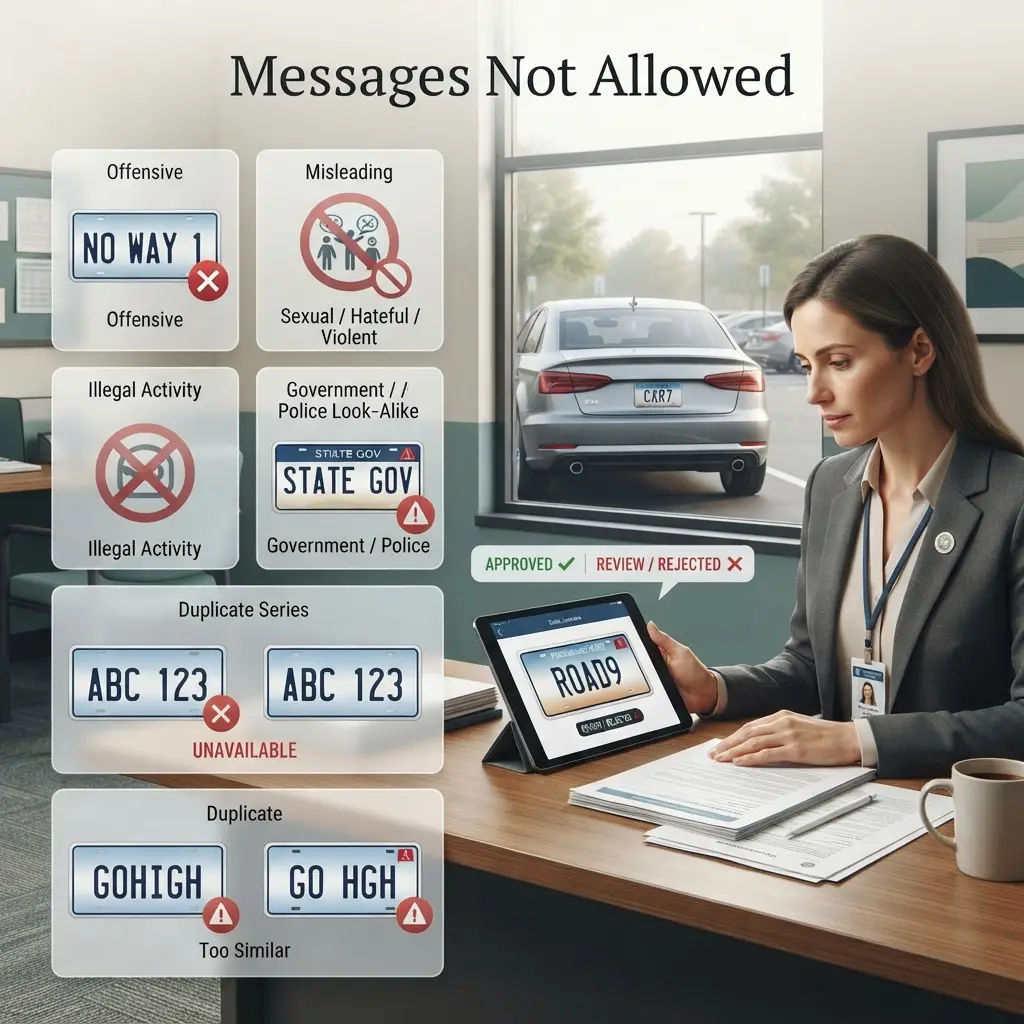
California says it may refuse any combination that carries connotations offensive to good taste and decency, or that is misleading or in conflict with an issued plate series. It also notes that substituting numbers for letters, or letters for numbers, can be confused with an existing plate and is not permitted. New York prohibits plates that use the letter O or I between numbers to mimic digits, and it does not allow POLICE or NYS. Ohio denies words and phrases in any language, forwards or backward, that are profane, obscene, sexually explicit, or that advocate lawless activity.
Texas says it declines a message that its reviewers find indecent, vulgar, or derogatory, or that refers to illegal activity. Read the state’s plate guidelines before you choose, and prepare backup options. If you’re registering a new vehicle, see our guide to register a car. A short list of five ideas usually covers the odds of a rejection.
How to Check If a Personalized Plate Is Available
Most states offer an online lookup that tells you whether a combination is already taken. Use it before you apply, since it takes a minute and can save weeks. The lookup shows availability at the moment you check, not a guarantee.
California says you can check online to find out whether a specific personalized configuration has been taken. Florida offers a Personalized License Plate Inquiry service for the same purpose. New York has an online tool, and Pennsylvania has an online vanity plate lookup.
Pennsylvania adds an honest warning. A configuration may show as available now, but another customer may already have submitted a request for the same one. Requests are processed first come, first served, so have a backup ready.
Can You Order Personalized License Plates Online?
Yes, in many states, though the method depends on the state and plate type. Some states handle everything online, while others require a paper form or an in-person visit. A few use a private vendor for part of the process.
California allows ordering online on the DMV site or by mailing the REG 17 form. New York offers online, mail, phone, and in-person options, but online ordering requires a valid registration that does not expire within 60 days. Ohio offers in-person, online through OPLATES.com, and mail options. Texas runs its My Plates program through a dedicated website, with instant online ordering for its My Plates Select designs.
Florida’s page says personalized plates may be ordered in person at a motor vehicle service center using form HSMV 83043. Pennsylvania uses Form MV-904 and asks for payment with the application. When in doubt, begin on the official .gov page and follow the link to the right method.
How Long Does It Take to Get Personalized License Plates?
Expect anywhere from three weeks to three months, depending on the state. Embossed or special designs usually take longer than flat plates. Your registration may also affect the timing.
The published figures show how much it varies. Texas says plates arrive at the county tax assessor-collector’s office in about three to four weeks, with embossed designs taking four to five weeks. New York says to allow at least six weeks, and Pennsylvania says to allow eight to ten weeks. California says personalized plates are available for pickup about 8 to 12 weeks after being ordered and processed.
Plan ahead if your registration expires soon. California notes that if your registration expires within 30 days of plate pickup, you must renew it to have the plates assigned. Keep driving on your current plates until the new ones are in your hands.
Renewing Personalized License Plates
Personalized plates are renewed along with your vehicle registration, and the annual fee is added to your renewal bill. If you skip the renewal, you may lose the right to the message. Ask your agency how long it holds a configuration after the registration lapses.
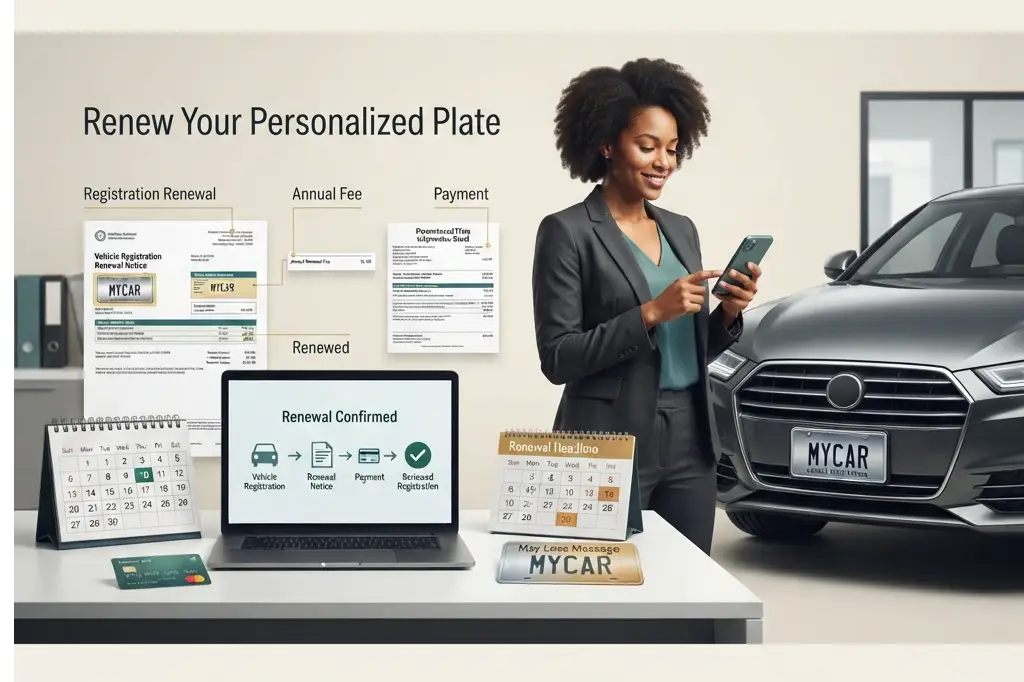
New York says you must pay the additional annual fee when you renew your registration. Texas says the fee for a plate term appears as a line item on the registration renewal notice. Florida lists the $15 annual fee as an ongoing charge.
Watch your renewal notice and your mail. Pay on time to keep the message that you chose. If you move to another state, you will need to apply again, since personalized messages are not guaranteed to transfer.
Can You Transfer or Keep Your Personalized Plates?
Often yes, within the same state. Many states allow you to move a personalized plate to a new vehicle, replace it if it is lost, or keep it after you sell a car. The steps differ, and a transfer fee may apply.
New York has a dedicated page for replacing or transferring personalized plates, which suggests a set process for both. Texas offers a restyle and port option on its plate site, so owners can change a design or move a message. California’s DMV manual mentions retention of personalized plates, which means there are rules for keeping a configuration.
If you plan to sell your car and keep the plates, ask the agency how to do it before the sale. Do not hand the plates to the buyer by accident. Remove them and complete the transfer paperwork the same day.
What to Do If Your Plate Is Rejected
A rejection is common and not final in some states. Start by reading the reason, then choose a new message or file an appeal if one is offered. Ohio, for example, requires a written appeal within thirty days of the denial notice.
Keep a list of backup messages. Try a variation that avoids the problem the reviewer flagged. If you paid in advance, ask whether the state refunds or holds your payment while you choose again. Questions about availability? Here’s the DMV phone number to call.
Common Mistakes When Ordering Personalized License Plates
These mistakes cause the most delays and wasted money:
- Applying without checking availability. A taken combination wastes time.
- Choosing a message with a double meaning. Reviewers may reject it.
- Ignoring character limits. Spaces and hyphens can count.
- Letting registration expire. Some orders cannot be processed if the registration is about to lapse.
- Forgetting the annual fee. The cost continues every year.
- Using unofficial websites. Third-party sites may add fees or sell nothing.
- Giving away your old plates too soon. Many states ask you to keep them until the new ones arrive.
- Not allowing enough time. Delivery can take two or three months.
Troubleshooting: Problems With Personalized Plates
The website says the plate is available, but the order fails. Another customer may have requested it first. Choose a different message and try again.
The plates have not arrived. Check your order confirmation and the delivery timeline in your state. Contact the agency with your order number if the time has passed.
The plates have a mistake. Contact the agency right away and keep your confirmation and photos. Ask whether you need to return the plates before a replacement is issued.
Your registration is about to expire. Renew it first if your state requires that before the plates can be assigned. Ask whether you can order at the same time.
You want to change the design. Check whether a restyle option exists, as Texas offers for a fee. Some states require a new order.
You moved to another state. Apply for new plates in your new state and check whether your message is available there. Return or dispose of the old plates as the old state requires.
Frequently Asked Questions
Final Word on Personalized License Plates
Personalized plates are easy to get when you plan the message, check availability, and know your state’s limits and fees. Prepare several backup options, since rejections and taken combinations are common. Watch the timeline, because delivery can take weeks or months.
Keep your current plates and registration in good order while you wait. Remember the annual fee when you budget, and renew on time to keep your message. A little preparation helps you get the plate you want without delays.