DMV Near Me: How to Find the Closest Office
Typing “DMV near me” into a search bar sounds like the easy part, but it often leads to the wrong place. The closest pin on a map may be a satellite office that cannot handle your task, a branch that is closed today, or a private business that only looks official.
You will also see which services each type of location offers, how to check hours before you leave, and what to do when the map data is wrong. Start with the quick answers if you are in a hurry, then use the checklist near the end.
What Does “DMV Near Me” Mean?
“DMV near me” means a motor vehicle office or service location close to where you are, usually found through a map or an official state locator. People search it when they need a license, an ID, a permit, a registration, a road test, or a title transfer. The phrase also covers variations such as “nearest DMV location,” “closest DMV,” “DMV open now near me,” and “DMV hours near me.”

There is no single national DMV. Each state runs its own system, and the agency may have a different name, such as the Secretary of State, DPS, MVD, BMV, or MVC. The locations can include full-service offices, small satellite offices, county offices, and approved partner locations. Because the name varies, the best habit is to search for your state’s name along with “official DMV” and open the .gov result.
The word “near” can also mislead you. The closest office on a map is not always the one with the shortest wait, the right services, or an open appointment. A branch twenty minutes farther away may save you hours.
How to Find the Closest DMV Office
The most reliable way is to use your state’s official office locator. Map apps are useful for directions, but the state site shows which services each location offers and whether it takes walk-ins or appointments only.
- Open your state’s official DMV website. Search for your state plus “DMV” and choose the result that ends in .gov.
- Find the “Locations” or “Office Finder” page. It may be called “Find an Office,” “Branch Locations,” or “Service Centers.”
- Enter your ZIP code or address. The tool lists nearby offices with distance, hours, and phone numbers.
- Filter by service. Choose your task, such as driver’s license, REAL ID, road test, or vehicle registration.
- Compare two or three offices. Check hours, wait time notes, and appointment availability.
- Confirm before you go. Look for holiday notices or alerts, and call if anything seems unclear.
If you prefer a map, search your state’s DMV name rather than just “DMV,” since results can include unrelated businesses. Cross-check the address and phone number against the official state page. Many state sites also have mobile apps or text alerts, which can show closures and wait times.
Types of DMV Locations You Might Find
Not every location offers the same services. Here is what you may see near you.
| Location type | What it usually offers | Watch out for |
|---|---|---|
| Full-service DMV office | Licenses, IDs, REAL ID, tests, titles, registration | Longer lines, appointments needed |
| Satellite or express office | Limited services, often renewals and replacements | May not offer tests or REAL ID |
| County or local government office | Vehicle titles and registration in some states | Driver services may be elsewhere |
| Self-service kiosk | Registration renewal, printing documents, some renewals | Limited transactions |
| Mobile DMV unit | Basic services in remote areas | Fixed schedule, check dates |
| Authorized partner or third-party site | Specific tasks, such as registration or driver license help | Fees may be higher |
| Driver testing site | Road tests and skills tests | Often separate from the main office |
In some states, services are split between agencies. In Florida, county tax collectors handle many driver and vehicle tasks, while in Georgia, driver services and vehicle tags are handled by different offices. In other states, a single office does it all.
When a map result looks like a DMV but has no state name, a government website link, or a clear service list, treat it with caution. Always verify through your state’s official page.
Which DMV Location Is Right for Your Task?
Choose the location by service first, then by distance. A short drive means little if the office cannot process your request. Use this quick list to match your task with the right type of location.
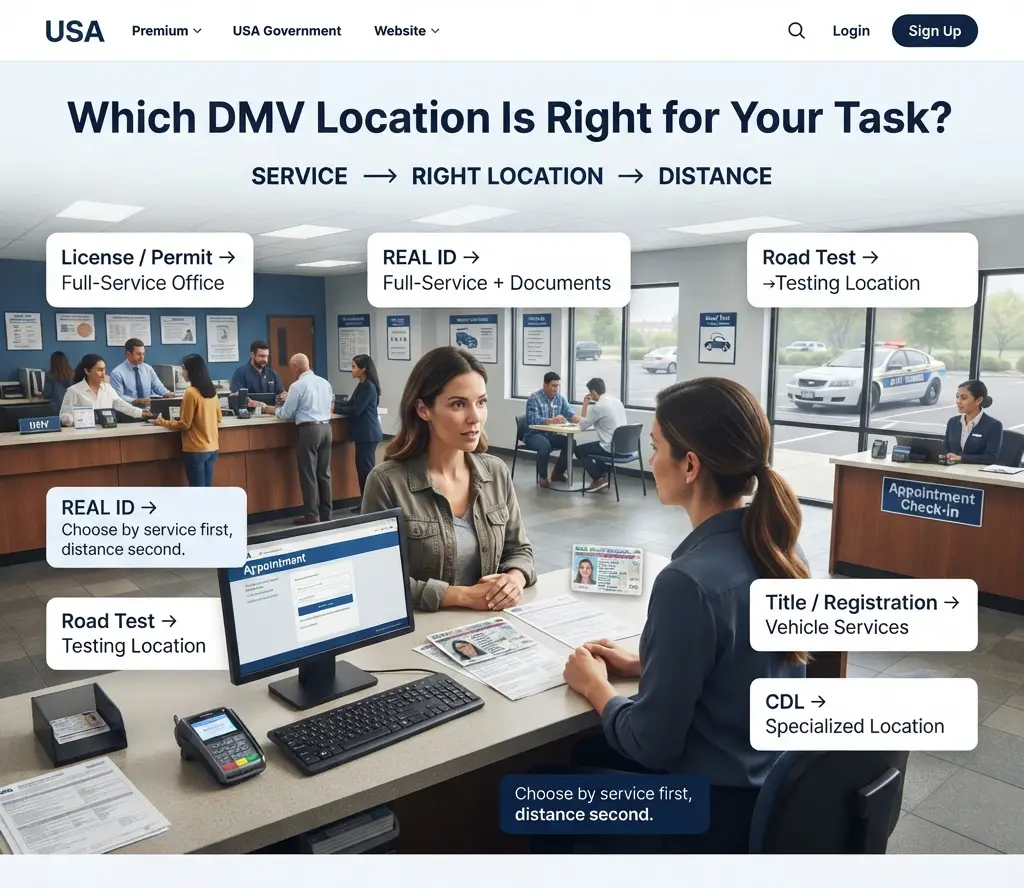
Before you drive, call or check the website to confirm that the office handles your service. Our page on how to book a DMV appointment explains how to reserve a slot once you pick a location. If you only need a renewal or an address update, check our pages on driver’s license renewal and how to change your address, since you may be able to skip the trip.
DMV Hours and “Open Now” Checks
Most DMV offices open on weekday mornings and close in the late afternoon, and many close on weekends and public holidays. Typical hours are roughly eight or nine in the morning until four or five in the afternoon, though they differ by state and office. Some offices open later or close earlier on certain days, and some stay open one evening a week.
When you search “DMV open now near me,” the hours you see may come from a map listing. These can be outdated, so confirm on the official page. Check for alerts about closures, weather, system outages, staffing shortages, and holiday schedules.
A few habits help:
- Check the hours on the same day you plan to go.
- Note the cutoff time for starting a transaction, since some offices stop accepting new customers before closing.
- Avoid the day after a long weekend, when offices tend to be busiest.
- Look for special hours for road tests, since they may end earlier.
- If the office has a lunch closure or limited hours for certain services, plan around it.
Appointment or Walk-In: What Should You Do?
An appointment is usually the safer option, but some offices still take walk-ins. Policies depend on your state, the office, and the service. Some offices require appointments for tests and REAL ID, while allowing walk-ins for simple tasks.
Walk-in lines can be long and unpredictable, and some offices stop taking walk-ins early in the day. If you must go without an appointment, arrive before opening and bring every document you might need. If you can schedule, pick a mid-week morning, since Mondays, Fridays, and the first and last days of the month tend to be crowded.
If no appointments are available at the nearest office, widen your search to nearby offices. Check again at different times of day, since cancellations appear throughout the day. Some states also offer a text or email waitlist.
Wait Times and the Best Times to Go
Mid-week mornings and mid-month days are usually calmer, while Mondays, Fridays, lunch hours, and month-end are busiest. Wait times depend on the office size, the time of year, and local events. Offices in big cities usually run busier than those in small towns.
Some state sites publish estimated wait times or a live queue. If yours does, check it before you leave. If not, use the pattern above and arrive early.
Another tip is to look at offices in neighboring towns or counties. A smaller office may have shorter lines, even if it is farther away. Compare drive time and wait time together.
What to Bring to the DMV
Bring original documents, a payment method, and your confirmation. Requirements vary by service and state, but most offices ask for similar items. Check your state’s document checklist before you leave home.
| Item | Why you may need it |
|---|---|
| Proof of identity | To confirm who you are |
| Social Security number proof | Required for most licenses and IDs |
| Proof of residency (often two) | To show your current address |
| Proof of legal presence | For non-citizens or REAL ID |
| Current license or ID | For renewals and replacements |
| Vehicle title, registration, insurance | For vehicle services |
| Payment method and a backup | Card readers and cash rules vary |
| Appointment confirmation | To check in quickly |
| Glasses or contacts | For the vision test |
Photocopies are often rejected, so bring originals or certified copies. If your name has changed, bring the marriage certificate or court order. For teens, a parent or guardian may need to sign forms and attend.
If you are not sure what you need, use the interactive document tool on your state’s site. It takes a few minutes and prevents most turn-aways.
Accessibility, Language Help, and Special Needs
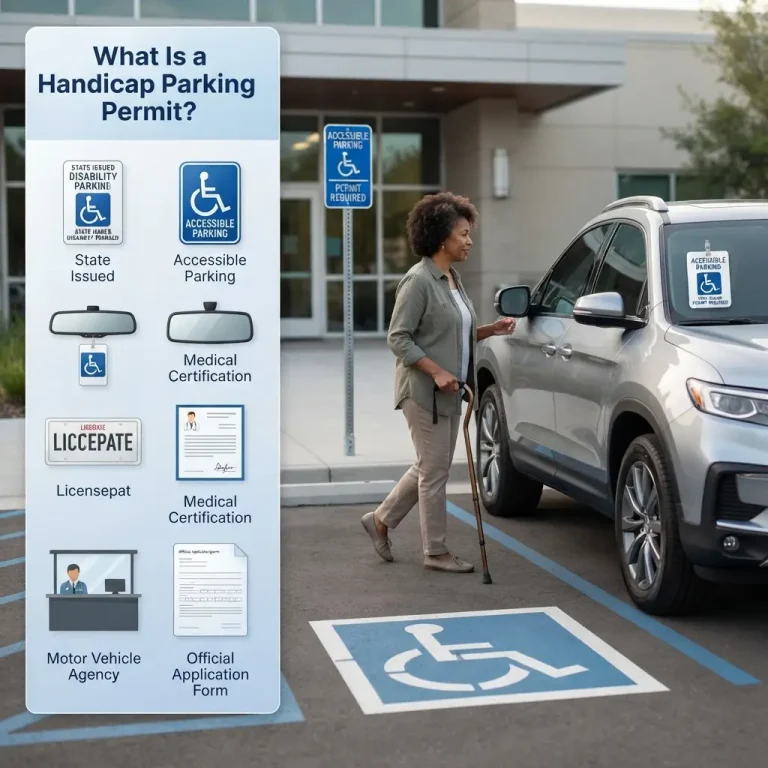
Most DMV offices offer accessibility services, but you may need to request them ahead of time. Wheelchair access, priority service for older adults, and help for people with disabilities are common. Call before your visit to confirm what is available at the location you pick.
If English is not your first language, ask whether the office offers interpreter services or translated materials. Some states provide written tests in several languages. Bringing a trusted friend or family member may help, though check whether they are allowed to assist during tests.
Offices differ in parking, public transit access, and building layout. If you rely on a bus or have trouble walking, check the office’s transit stop and entrance details. A little planning makes the visit less stressful.
Fake Sites and Look-Alike Offices
The official DMV website for your state ends in .gov. Many search results for “DMV near me” and “DMV appointment” show private companies that mimic official pages. Some charge a fee for information that is free, collect personal data, or sell “priority” services that do not exist.
Warning signs include:

A private business named DMV.com, for example, is not a government agency. Some third-party partner offices are authorized by states and can be legitimate, but they should be listed on your state’s official site. If in doubt, call the number on the .gov page.
Common Mistakes When Searching for a DMV Near You
Most wasted trips come from preventable errors.
Picking the closest pin without checking services. A satellite office may not offer tests or REAL ID. Confirm the service list first.
Trusting outdated hours. Map listings can be wrong. Check the official page on the day.
Going without an appointment. Walk-ins may be limited. Book a slot if you can.
Choosing the wrong office type. Vehicle services and driver services may be in different buildings.
Bringing the wrong documents. Missing proof of residency is the most common reason for being turned away.
Arriving late. Some offices cancel or move late appointments, and many stop accepting walk-ins before closing.
Using an unofficial site. Third-party pages may charge extra or collect your data.
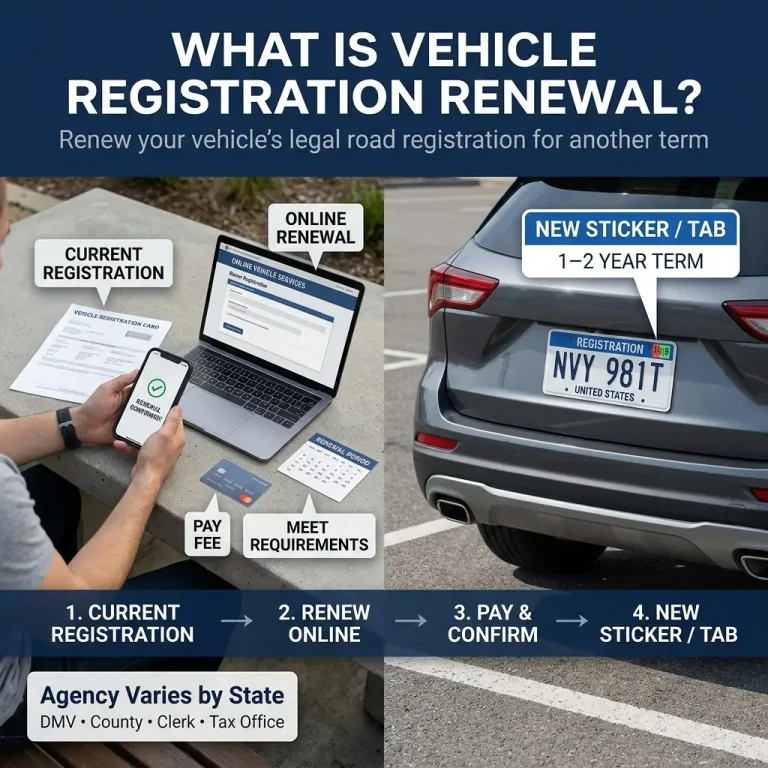
Forgetting about online options. Many tasks, such as renewals or address changes, can be done without a visit.
Troubleshooting: When “DMV Near Me” Does Not Work
Most problems have a simple fix.
The Map Shows the Wrong Hours or Address
Check your state’s official locator and the office’s phone number. Report the error through the map app if you can. Do not rely on a listing that conflicts with the official page.
The Office Is Closed When You Arrive
Look for a posted notice and check the website for closures. Ask a staff member or call the main line about nearby offices that are open. Next time, check the official site on the day you travel.
No Appointments Are Available Nearby
Try other offices, check at different times, and look for cancellations. Ask about a waitlist, walk-in hours, or mobile units. See whether your task can be done online or by mail.
The Closest Office Does Not Offer Your Service
Use the state’s service filter to find a location that does. Call ahead to confirm, since service lists can change. Consider driving farther if it saves a second trip.
The Line Is Too Long
Ask whether there is a separate line for appointments, kiosks, or quick services. Consider returning at a calmer time, if allowed. Check whether your task can be done online instead.
You Went to the Wrong Place
Ask the staff where to go, and get the address or the office name. Some states provide a referral or note so you do not start over. Keep your documents together and ask if you can be seen the same day.
Checklist and Tips
Use this list before you leave home.
- ☐ Confirmed the office offers my service
- ☐ Checked hours and any closures on the official site
- ☐ Booked an appointment or checked the walk-in policy
- ☐ Gathered original documents and a backup payment method
- ☐ Checked parking, transit, and accessibility
- ☐ Saved the address, phone number, and confirmation
- ☐ Arrived 10 to 15 minutes early
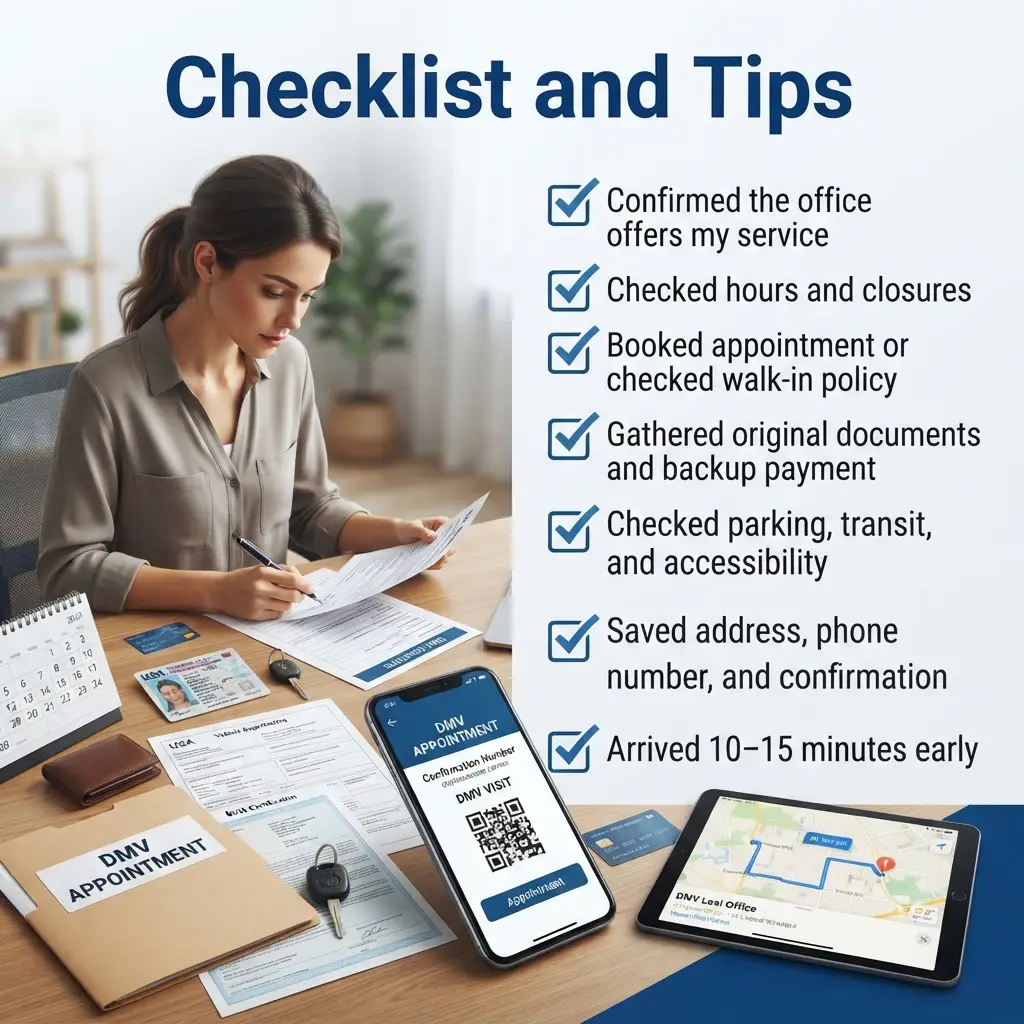
A few tips help in practice. Compare two or three offices before choosing. Go mid-week in the morning when you can. Take photos of your documents for your own records, but bring the originals. If your task can be done online, do it from home and skip the trip.
DMV Location Terms Explained
| Term | Meaning |
|---|---|
| DMV / BMV / MVD / DPS | Names states use for their motor vehicle agencies |
| Full-service office | A location that offers most licensing and vehicle services |
| Satellite office | A smaller office with limited services |
| Kiosk | A self-service machine for simple tasks |
| Mobile DMV | A traveling unit that serves remote areas |
| Walk-in | A visit without a booked time |
| Appointment | A reserved time slot at an office |
| REAL ID | A federally compliant license or ID, usually marked with a star |
| .gov domain | The ending used by official government websites |
Frequently Asked Questions
Conclusion
Finding a DMV near you is easy, but finding the right one takes a few extra minutes of checking. Start with your state’s official .gov locator, filter by service, and confirm hours and appointment rules before you drive. Compare two or three offices, since the closest one is not always the fastest or the one that offers your service.
Most wasted trips come from outdated map listings, missing documents, and unofficial websites. Use the checklist on this page, check online options first, and arrive early with your originals and a backup payment method. A little preparation turns a stressful errand into a quick visit.