SR22 Insurance: What It Is, Who Needs It, What It Costs
If a court or your state’s DMV told you to get SR22 insurance, you probably have a lot of questions and not much time. The name is confusing, the cost can feel steep, and one missed payment can put your license at risk again.

You will also find a step-by-step process, a troubleshooting section, ways to lower the cost, and answers to the questions people ask most. A note before you start: this page gives general information, not legal or insurance advice, and your state’s rules and your own paperwork always come first.
What Is SR22 Insurance?
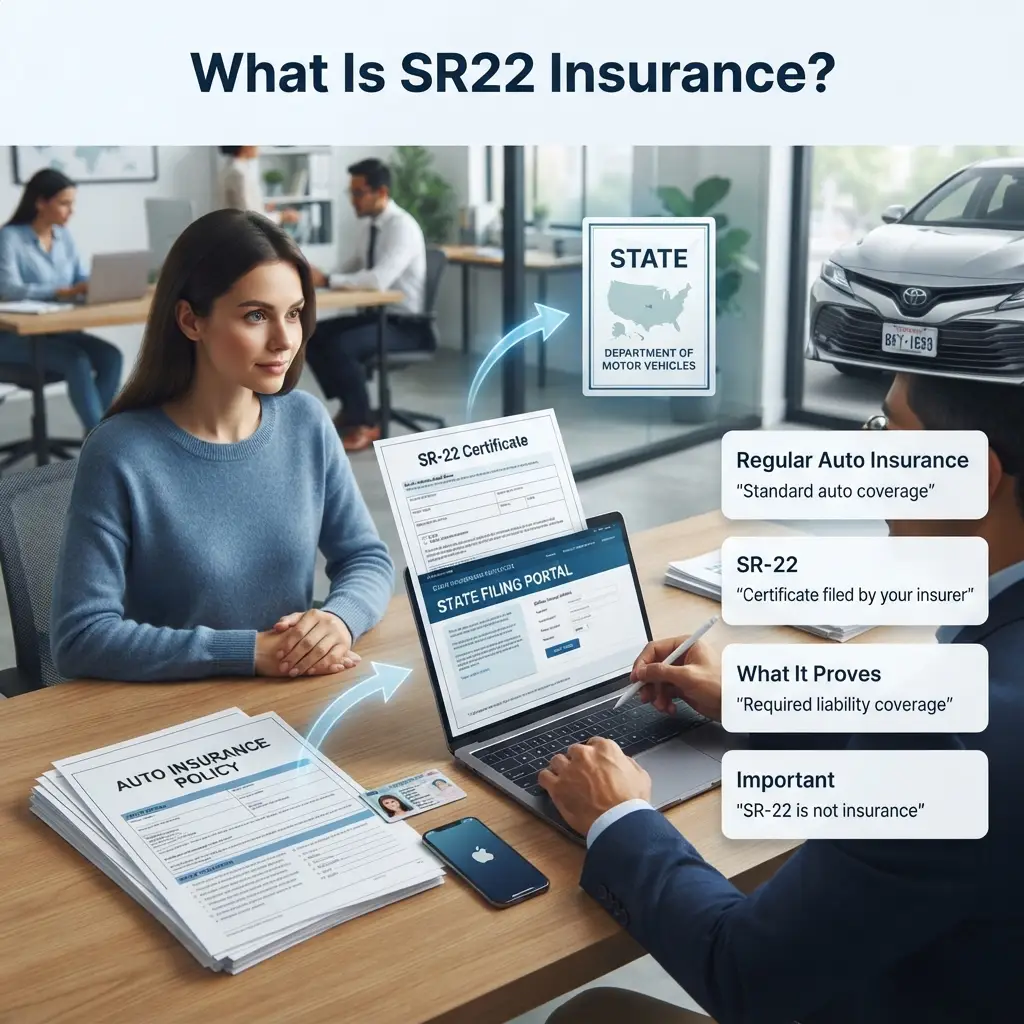
SR22 insurance is a regular auto insurance policy with an SR-22 certificate filed on your behalf, proving to the state that you carry at least the required minimum liability coverage. The SR-22 is not insurance by itself. It is a form your insurance company submits to your state, usually to the DMV, showing that you are insured and that the company will tell the state if the coverage ends.
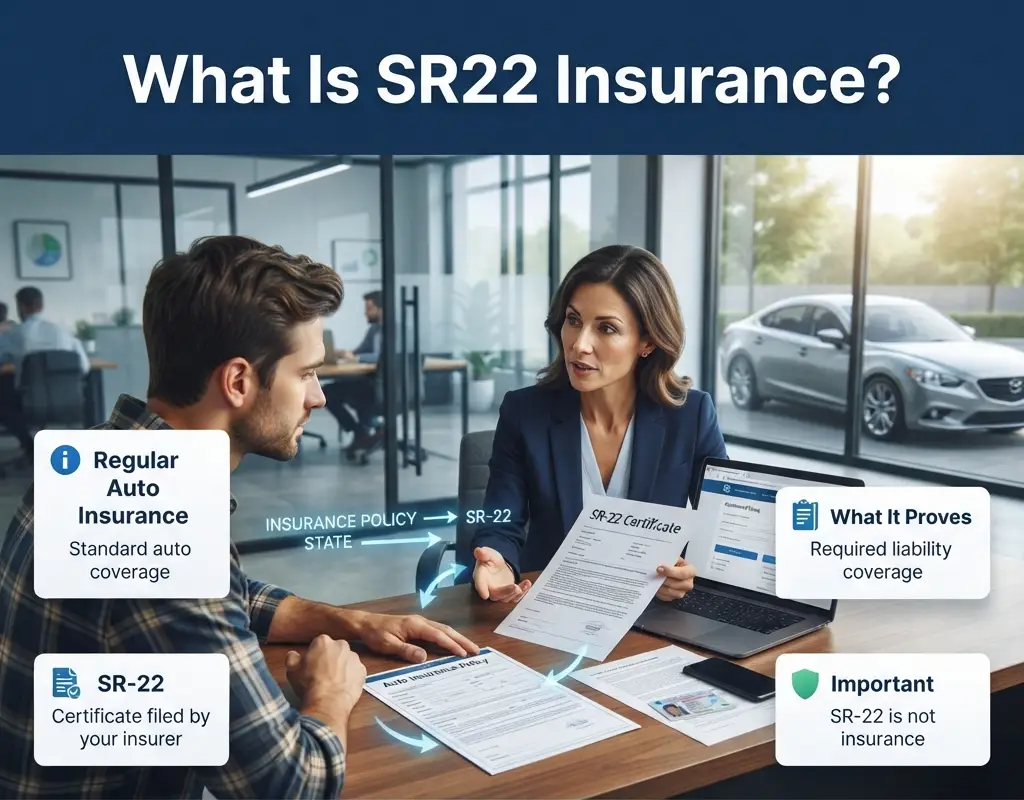
People search for this in many ways, including “SR 22 insurance,” “SR-22 car insurance,” “insurance with SR22,” and “SR22 auto insurance.” They all mean the same thing: a policy plus a filing. The coverage itself is standard, and the SR-22 is simply added on top.
Filing an SR-22 does not by itself restore your license or give you permission to drive. It is one requirement among several, which may include fines, classes, waiting periods, and reinstatement fees. Think of it as proof of responsibility that the state wants to see on file before it trusts you on the road again.
What Does SR22 Insurance Cover?
It covers the same things as the underlying auto policy, which usually means at least your state’s minimum liability limits. Liability coverage pays for injuries and property damage you cause to other people, up to your policy limits. It does not pay to repair your own car unless you also buy collision or comprehensive coverage.
Here is what is typically included and what is not:
| Coverage | Included by default? | What it does |
|---|---|---|
| Bodily injury liability | Required minimum | Pays for injuries you cause to others |
| Property damage liability | Required minimum | Pays for damage you cause to others’ property |
| Collision | Optional | Pays to repair your car after a crash |
| Comprehensive | Optional | Covers theft, weather, and similar events |
| Uninsured motorist | Varies by state | Helps if the other driver has no insurance |
| SR-22 filing | Added | Tells the state you carry the required coverage |
If you have a car loan or lease, your lender may require collision and comprehensive coverage as well. The SR-22 itself does not change what the policy covers. It only adds the reporting duty to your insurer.
Who Needs an SR-22?
You need an SR-22 only if a court or your state’s motor vehicle agency orders you to file one. It is a requirement tied to a violation or a suspension, not something you buy by choice. You will normally get a letter or court order explaining why and for how long.
The most common reasons include:
Not every violation leads to an SR-22, and the rules vary a lot by state. If you are not sure whether you need one, read your court or DMV notice carefully, then ask the agency or your insurer. Do not file one on your own unless you have been told to, since it will not help you and may raise your costs.
SR-22 vs. FR-44, and States That Do Not Use It
Most states use the SR-22, but a few use different systems, and two states use a related form called an FR-44. Florida and Virginia require an FR-44 for serious offenses such as DUI or reckless driving. The FR-44 works like an SR-22 but usually requires higher liability limits.
Some states do not use the SR-22 at all. A number of states, such as New York and Pennsylvania, rely on other methods to monitor insurance after violations. Lists of these states differ between sources and can change, so check your own state’s DMV page rather than relying on a general list.
If you file an SR-22 in one state, you must keep the required coverage for the whole filing period, even if you later move to a state that does not use the form. Moving does not erase the requirement. Ask your old state and your new state how to handle it, and keep your insurer informed.
How to Get SR22 Insurance: Step by Step
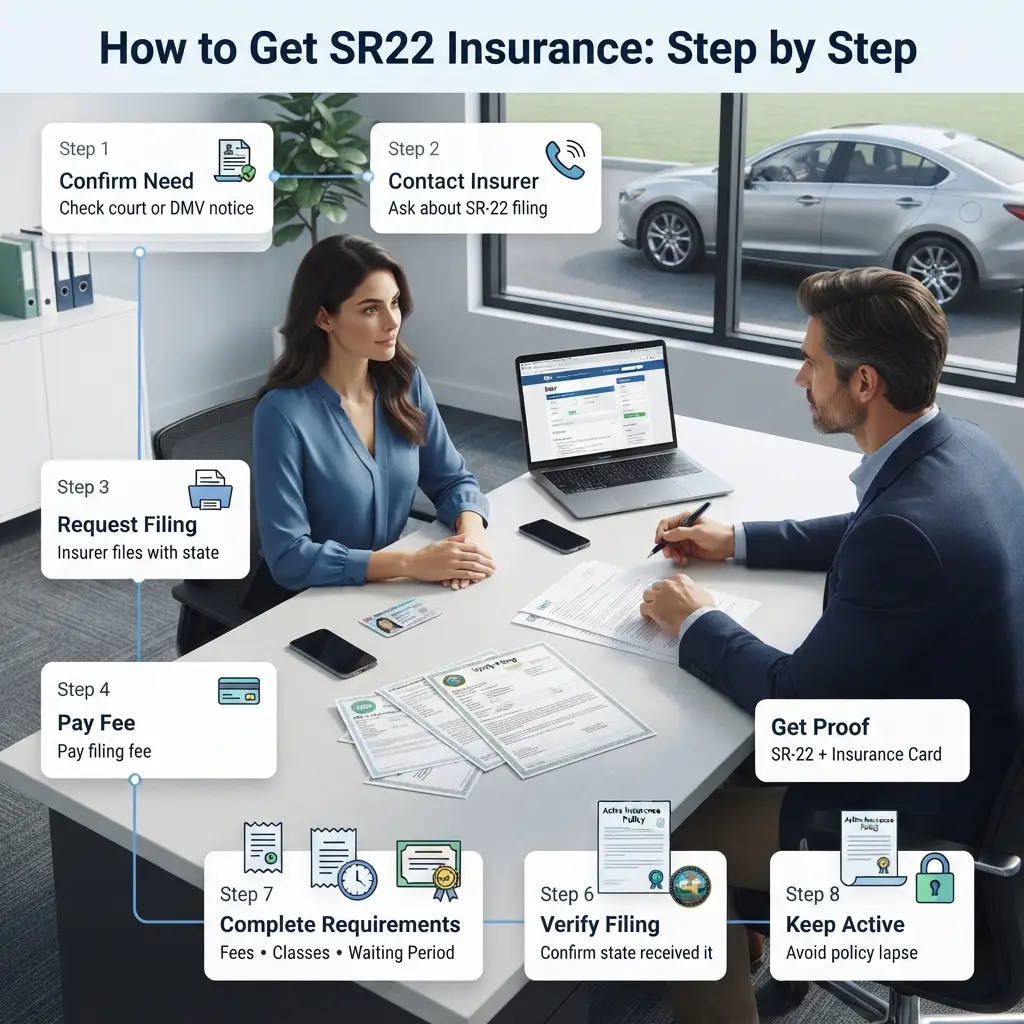
The process is simple if you already have a car and an active policy. Here is the usual order.
- Confirm that you need one. Read the court order or DMV letter. Note the state, the reason, the required coverage limits, and how long the filing must stay on record.
- Call your current insurer. Ask whether it files SR-22 forms in your state. Many do, but some decline high-risk drivers.
- Request the filing. Your insurer adds an SR-22 endorsement to your policy and files the form with the state.
- Pay the filing fee. The fee is usually small and may be charged upfront or added to your premium.
- Get your proof. Ask for a copy of the SR-22 certificate and your updated insurance card.
- Confirm the state received it. Check with the DMV or use its online tool if available. Filings are often electronic, but you should verify.
- Complete the other requirements. Pay reinstatement fees, finish classes, and meet any waiting period.
- Keep the policy active. Do not let it lapse for the full filing period.
If your insurer will not file an SR-22, you will need to shop for a company that does. Some insurers specialize in high-risk drivers and handle these filings every day. Ask each company about its fee, its monthly cost, and how fast it can file.
Where Can You Get SR22 Insurance?
You can get it from many major insurers, from companies that specialize in high-risk drivers, and through independent agents. Not every company offers it in every state, so you may need to ask. Online quote tools can help, though some companies require a phone call.
| Source | Best for | Watch out for |
|---|---|---|
| Your current insurer | Keeping your policy and history | May raise your rate or decline you |
| High-risk specialist insurer | Drivers with serious violations | Rates can be higher |
| Independent agent | Comparing several companies at once | May charge a service fee |
| Online comparison tools | Fast price checks | Some quotes change after review |
| State-assigned risk plan | Drivers who are turned down elsewhere | Higher cost, limited options |
Get at least three quotes if you can. Prices for the same driver can differ a lot between companies, and a small difference each month adds up over three years. Always compare the total cost, not just the filing fee.
Non-Owner SR-22 Insurance
If you do not own a car but still need an SR-22, a non-owner policy can satisfy the requirement. A non-owner policy covers you as a driver when you borrow or rent vehicles, and it can carry the SR-22 filing. It does not cover a car that you own, and it usually does not cover vehicles available for your regular use.
This option is common for people who lost their license, sold their car, or only drive occasionally. It is often cheaper than a standard policy because it covers fewer risks. The state still wants proof, so the filing is the same.
If you later buy a car, tell your insurer so you can switch to a regular policy with the filing. Do not skip this step, since driving a car you own on a non-owner policy can leave you uncovered. Ask your agent how to move from one policy to the other without a gap.
How Much Does SR22 Insurance Cost?
The filing fee is small, but your premium usually rises, and that increase is the real cost. The SR-22 filing fee is typically between $15 and $50, though some insurers charge more. Some companies charge it once, while others add it at each renewal.
The bigger expense comes from the violation that triggered the requirement. Insurance companies treat you as a higher-risk driver, so premiums often rise by hundreds of dollars a year. The exact increase depends on your state, your age, your record, your vehicle, and the insurer.
| Cost item | What to expect |
|---|---|
| SR-22 filing fee | Often $15 to $50, sometimes charged again at renewal |
| Higher premiums | Can add hundreds of dollars a year, varies widely |
| Reinstatement fee | Set by your state, separate from insurance |
| Court fines and classes | Depend on the case |
| Non-owner policy | Often cheaper than full coverage |
A few things can bring the price down. Compare several insurers, ask about discounts, raise your deductible if you carry collision coverage, and pay in full if you can. Drive a lower-cost vehicle if you have the option. Avoid new tickets, since each one can raise the price again.
How Long Do You Need SR22 Insurance?
Most states require an SR-22 for about three years, though the period can range from one to five years or longer. The clock often starts on the date of the conviction or the date of reinstatement, depending on the state. Some serious offenses lead to longer terms.
Your court order or DMV letter states the exact period. Write down the start and end dates, and set a reminder so you know when it ends. Do not cancel your insurance early, even if you think the time has passed.
At the end of the period, the state usually removes the requirement, but check that it has. Ask your DMV for confirmation, then talk to your insurer about removing the filing. You may see your rates drop, though it can take time as the violation ages off your record.
Getting Your License Back with an SR-22
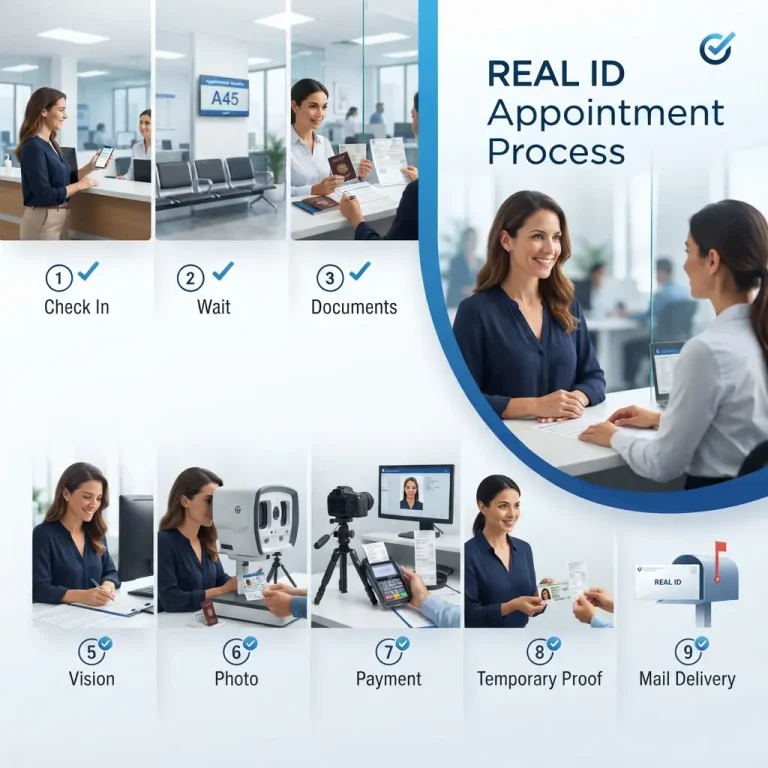
An SR-22 is one step in reinstatement, not the whole process. After a suspension, the state may require a waiting period, a reinstatement fee, proof of insurance, and sometimes classes or tests. You usually need to finish all of them before the DMV restores your license.
Our page on how to check your driver’s license status explains how to see whether your license is valid, suspended, or pending reinstatement. Check it before you drive, even if you have filed the SR-22. If your license expired during the suspension, you may also need to renew it, and our page on driver’s license renewal covers that process.
Keep every receipt and confirmation. If the DMV shows that something is missing, you can answer quickly with proof. Some states let you finish reinstatement online, while others require an in-person visit, so confirm before you go.
What Happens If Your SR-22 Coverage Lapses?
If your policy cancels or lapses, your insurer must tell the state, and your license can be suspended again. This is the biggest danger of an SR-22. A missed payment, a cancelled policy, or a switch to a new insurer with a gap in coverage can trigger a notice to the DMV.
When that happens, the state may suspend your license again, add fees, and in some cases restart the SR-22 clock. You may also face fines or new penalties if you drive while suspended. Getting back on track can cost far more than the premiums you tried to save.
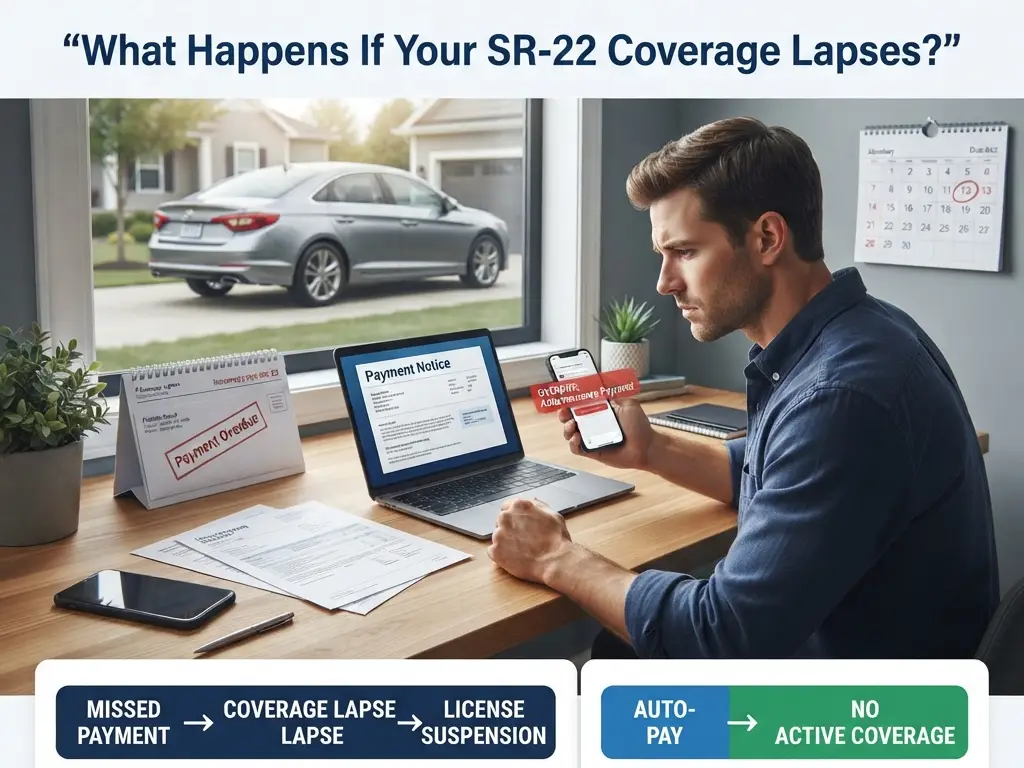
To avoid this, set up automatic payments, keep a reminder for the due date, and call your insurer before you miss a payment. If you plan to switch companies, line up the new policy and the new SR-22 filing before you cancel the old one, so there is no gap.
Moving, Switching Insurers, and Out-of-State Drivers
You can switch insurers while you have an SR-22, as long as there is no gap in coverage. The new company must file the SR-22 before the old one ends. Ask both companies how they handle the overlap, and keep copies of everything.
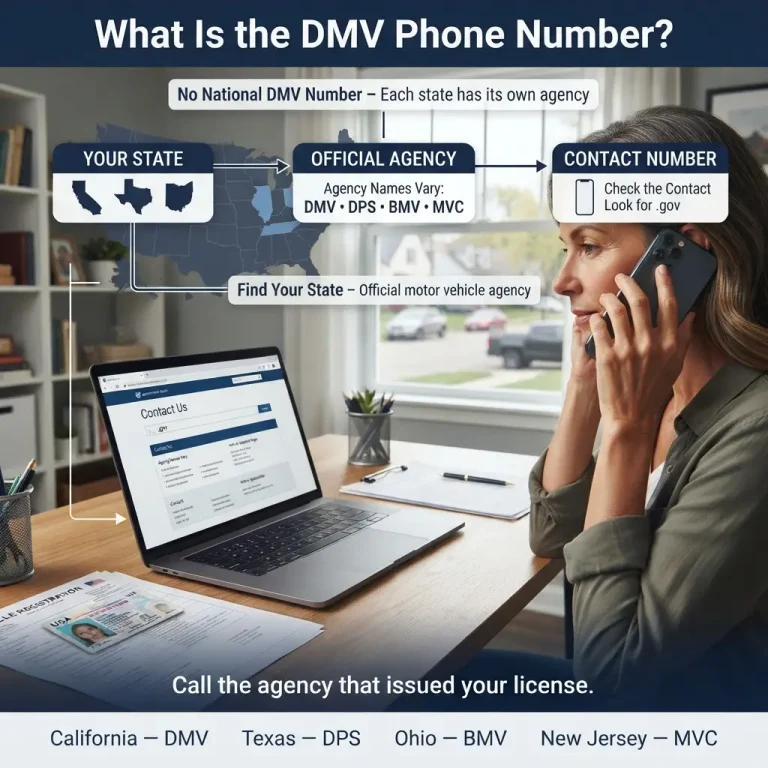
If you move to another state, you generally must keep the SR-22 and meet the coverage requirements of the state that required it. Contact the DMV in both states to confirm what to do. Some states accept an out-of-state filing, while others require a new one, and you may need an insurer licensed in the state that issued the requirement.
If you move to a state with no SR-22 system, you may still need to keep coverage for the full filing period. Do not assume the requirement disappears. Ask for written confirmation from the DMV before you change anything.
Common Mistakes With SR22 Insurance
Most problems come from timing, lapses, and misunderstanding what the form does.
Letting the policy lapse. Even a short gap can trigger a new suspension. Set up reminders and automatic payments.
Cancelling early. Ending the policy before the filing period ends can restart the problem. Keep it until the DMV confirms.
Assuming the SR-22 restores the license. It does not. You must complete all other requirements as well.
Buying coverage that does not meet the state minimum. The policy must meet your state’s required limits, or the filing may be rejected.
Not telling the insurer about a move or a new car. Changes can affect the filing and your coverage.
Choosing only the cheapest filing fee. A low fee can come with a high monthly premium. Compare the full price.
Ignoring DMV letters. Notices may include deadlines or confirm that the filing was received. Read every letter.
Driving before reinstatement is confirmed. Check your license status first.
Troubleshooting SR-22 Problems
Most problems have a clear fix.
Your Insurer Will Not File an SR-22
Ask whether they file in your state and whether they decline high-risk drivers. If not, shop for a company that does, including high-risk specialists and independent agents. Some states also offer a state-assigned risk plan for drivers who are turned down.
The DMV Says It Has Not Received Your Filing
Ask your insurer for proof of the filing date and the confirmation number. Call the DMV with those details and ask them to check. Filings can take a few days to appear, but do not wait too long.
You Missed a Payment
Call your insurer right away. Some companies offer a short grace period, but not all do. Ask what the insurer will report to the DMV, and pay as soon as you can.
You Are Cancelled by Your Insurer
Find a new policy and a new SR-22 filing immediately. Try to avoid any gap in coverage. If a gap occurs, contact the DMV to learn what steps you must take.
Your Quote Is Too High
Compare more companies, ask about discounts, adjust your coverage and deductible, and consider a non-owner policy if you do not own a car. Ask an independent agent to shop several insurers for you. Rates improve over time as your record stays clean.
You Moved to Another State
Contact the DMV in the state that required the SR-22, and the DMV in your new state. Ask whether the filing must stay active and how to update your insurer. Keep written confirmation of what you are told.
Tips for Getting Through an SR-22 Period
A few habits make this period easier. Treat your insurance payment as your first bill each month, and keep your policy information in your phone and your glovebox. Drive carefully, since a new violation can extend the requirement or raise your rates.
Keep a folder with your court order, DMV letters, SR-22 confirmation, insurance cards, and receipts. Write down the date the requirement ends. If you are unsure about any step, ask your insurer or the DMV before you act, and consider speaking with a licensed attorney if the case is complicated.
When the period ends, shop for new quotes. Rates often drop after the requirement is gone, and a different insurer may offer a better price.
SR-22 Checklist
Use this list while you set things up.
SR-22 Terms Explained
| Term | Meaning |
|---|---|
| SR-22 | A certificate filed by your insurer proving you carry the required coverage |
| FR-44 | A similar filing used in Florida and Virginia, usually with higher limits |
| High-risk driver | A driver an insurer sees as more likely to file claims |
| Non-owner policy | Liability coverage for people who do not own a car |
| Filing fee | A charge by the insurer to submit the SR-22 |
| Lapse | A gap in insurance coverage |
| Reinstatement | The process to restore a suspended or revoked license |
| Liability coverage | Insurance that pays for harm you cause to others |
| Assigned risk plan | A state program for drivers who cannot find coverage elsewhere |
| Endorsement | An addition to your policy, such as the SR-22 filing |
Frequently Asked Questions
Conclusion
SR22 insurance sounds more complicated than it is. It is a normal liability policy with a form filed by your insurer, and its job is to show your state that you stay insured. Read your notice, call insurers that file in your state, compare the total cost, and keep the policy active for every day of the required period.
Most trouble comes from lapses, early cancellations, and assuming the filing restores your license by itself. Use the checklist on this page, keep your paperwork together, and check your license status before you drive. With steady payments and careful driving, you can finish the requirement and return to regular insurance rates.