REAL ID Requirements: Documents How to Get One
A REAL ID is a driver’s license or state ID card that meets federal security standards, and you now need one, or another accepted ID, to board a domestic flight. Many people lose a whole morning at the DMV because one document was missing, a name did not match, or the address proof was too old.
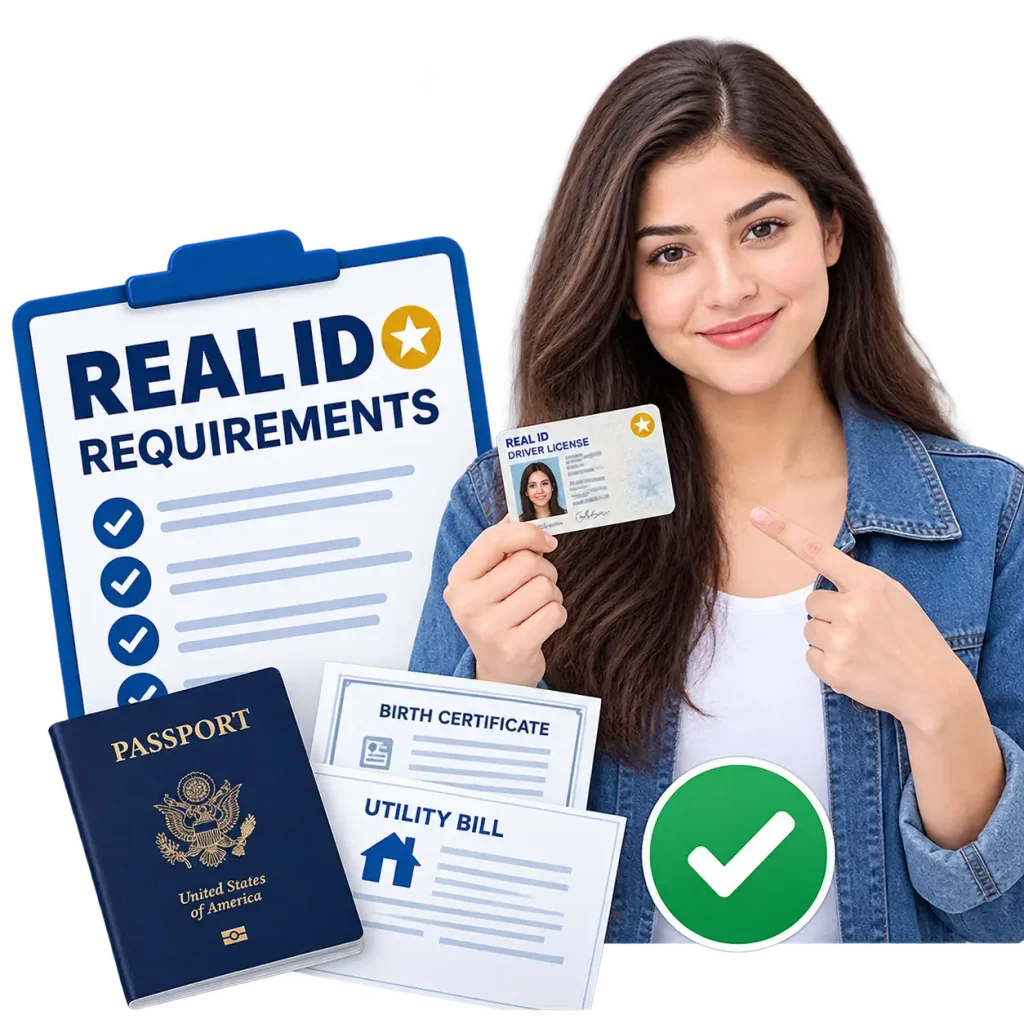
You will also find a step-by-step process, a troubleshooting section, a checklist, and answers to the questions people ask most. Read the document section closely, since that is where most visits go wrong.
What Is a REAL ID?
A REAL ID is a state-issued driver’s license or ID card that meets the security standards set by the federal REAL ID Act. The law was passed in 2005 after the 9/11 Commission recommended stronger rules for identification. States issue the cards, but they must follow federal standards for verifying identity, lawful presence, and address before they print one.
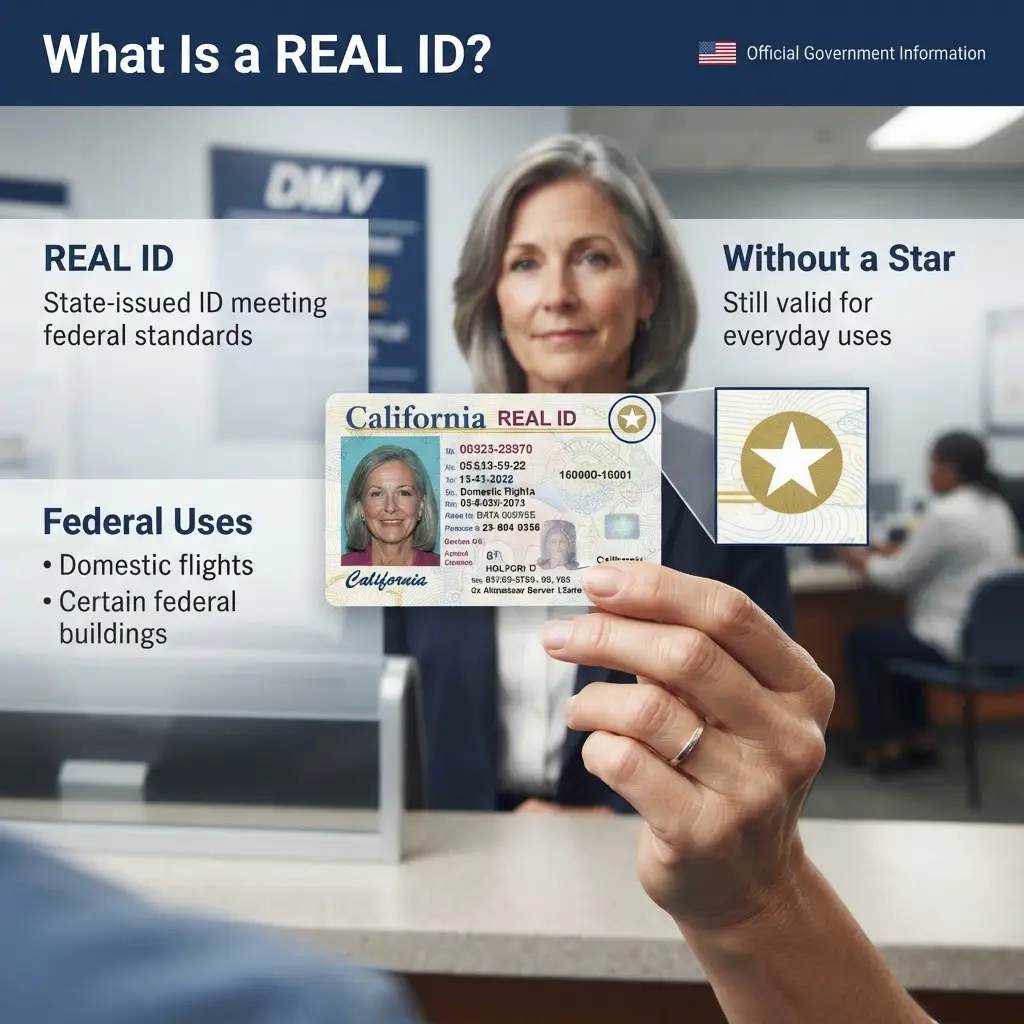
You can usually spot a REAL ID by a star marking in the upper part of the card, though the shape and color of the mark can vary by state. A card without the star is still valid for driving, voting registration, and many everyday uses. It will not satisfy federal requirements for boarding domestic flights or entering certain federal buildings.
Full enforcement of the REAL ID Act at airports has been in effect since May 7, 2025. That date ended the long series of delays, so the old advice to wait and see no longer applies.
Who Needs a REAL ID and Who Does Not
You need a REAL ID, or another accepted ID, if you want to fly within the country or enter federal facilities that check identification. You do not need one to drive, to vote, to get most government services, or to enter a post office or federal court as a member of the public. Rules at specific federal buildings can differ, so check before you visit.
Many travelers already have an acceptable alternative. Not sure what REAL ID is? Start with our guide on what is REAL ID. A valid U.S. passport, passport card, military ID, permanent resident card, and several trusted traveler cards are accepted at TSA checkpoints in place of a REAL ID. Children under 18 are exempt from the ID requirement at screening.
| Situation | Do you need a REAL ID? |
|---|---|
| Driving a car | No |
| Boarding a domestic flight | Yes, or another accepted ID |
| Entering a military base or secure federal building | Often yes, check the site rules |
| Entering a federal courthouse as a visitor | Usually accepted ID is checked, ask first |
| Flying with a valid U.S. passport | No, the passport works |
| Traveling internationally | Passport required |
A REAL ID is optional. Some people choose to keep a standard license because they carry a passport everywhere. That is a reasonable choice, but it only works if you always have the passport with you at the airport.
What Are the REAL ID Requirements? The Four Document Categories
Every state asks you to prove four things: who you are, your Social Security number, where you live, and that you are lawfully present in the country. The federal rules set the categories, and each state publishes its own list of accepted papers. Bring original documents or certified copies, since photocopies and phone photos are usually rejected.
| Category | What it proves | Common examples |
|---|---|---|
| Proof of identity | Your full legal name and date of birth | U.S. passport, certified birth certificate, permanent resident card |
| Proof of Social Security number | Your SSN | Social Security card, W-2, pay stub, or SSA-1099 showing the full number |
| Proof of residency (usually two) | Your current street address | Utility bill, bank statement, lease or mortgage, insurance statement |
| Proof of lawful status | That you are a citizen or lawfully present | Passport, naturalization certificate, valid immigration documents |
The identity document and the lawful status document are often the same item. A U.S. passport, for example, covers both, so you may need fewer papers than you expect. If you do not have a passport, a certified birth certificate with a raised seal is the most common option for U.S. citizens.
Check the date on every document. Many states want residency proofs issued within the last 60 to 90 days, and an expired identity document may be refused. Use your state’s interactive document checklist, since it tells you exactly which combination works for your situation.
Documents That Are Usually Accepted
The exact lists differ by state, but the same types of documents appear almost everywhere. Treat the table below as a starting point, then confirm it on your state’s official page.
| Document | Usually accepted as | Notes |
|---|---|---|
| U.S. passport or passport card | Identity and lawful status | Must be valid or recently expired, depending on state |
| Certified birth certificate | Identity | Original or certified copy with a seal |
| Permanent resident card | Identity and lawful status | Must be unexpired |
| Social Security card | SSN | Not laminated in some states, check yours |
| W-2 or SSA-1099 | SSN | Must show your full number and name |
| Utility bill | Residency | Name and address must match |
| Bank or credit card statement | Residency | Printed or official PDF |
| Lease, mortgage, or deed | Residency | Signed and current |
| Insurance policy or statement | Residency | Check state list |
| Marriage certificate or court order | Name change | Needed if names differ across documents |
If your name is the same on every document, you are in good shape. If it is not, the next section matters a lot.
Name Change and Address Rules
The name on your documents must match, or you must show the paper trail that links them. Marriage, divorce, and court orders are the most common reasons for a mismatch. Bring the original or certified marriage certificate, divorce decree, or court-ordered name change for every change between your birth name and your current name. Once ready, book your REAL ID appointment online.
Update your name with the Social Security Administration first if it has changed. The DMV usually checks your name against federal records, and a mismatch can stop the application. Waiting a few days after the update before you visit the DMV can avoid a rejection.
Address rules matter just as much. You must show a residential street address, and a PO Box does not count as a residence. Both of your proofs of residency should show the address you will print on the card, and in some states you can also list a separate mailing address. If you moved recently, see our page on how to change the address on your driver’s license, since an old address can cause delays.

If you live with family or a roommate and have no bills in your name, ask your state about alternatives. Some DMVs accept a signed statement from the person you live with, plus their own proof of address. This varies a lot, so call or check the website before you go.
REAL ID Requirements for Non-Citizens
Yes, a non-citizen can get a REAL ID if they can show lawful status, but the rules and the card’s term differ. You need to present valid immigration documents, such as a permanent resident card, an employment authorization document, or a valid foreign passport with a visa and the required entry record. The state checks these against federal databases, which can add processing time.
For people with temporary status, the card’s expiration date usually matches the end of the authorized stay. That means a shorter card term and a new visit when the status is extended. Check the DMV fee calculator to estimate your total cost. Some states issue a temporary paper document while the system confirms your status, and the permanent card follows by mail.
Rules change, and some states have extra steps. Bring every immigration document you have, along with your Social Security number if you have one, or proof that you are not eligible for one. If you are unsure which papers count, ask your state before you book a slot.
How to Get a REAL ID Step by Step
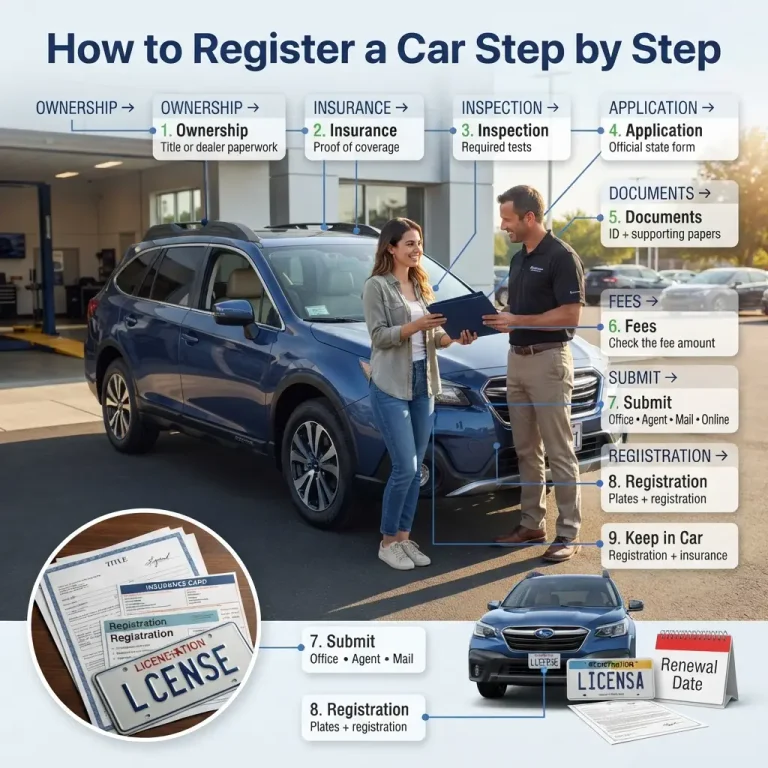
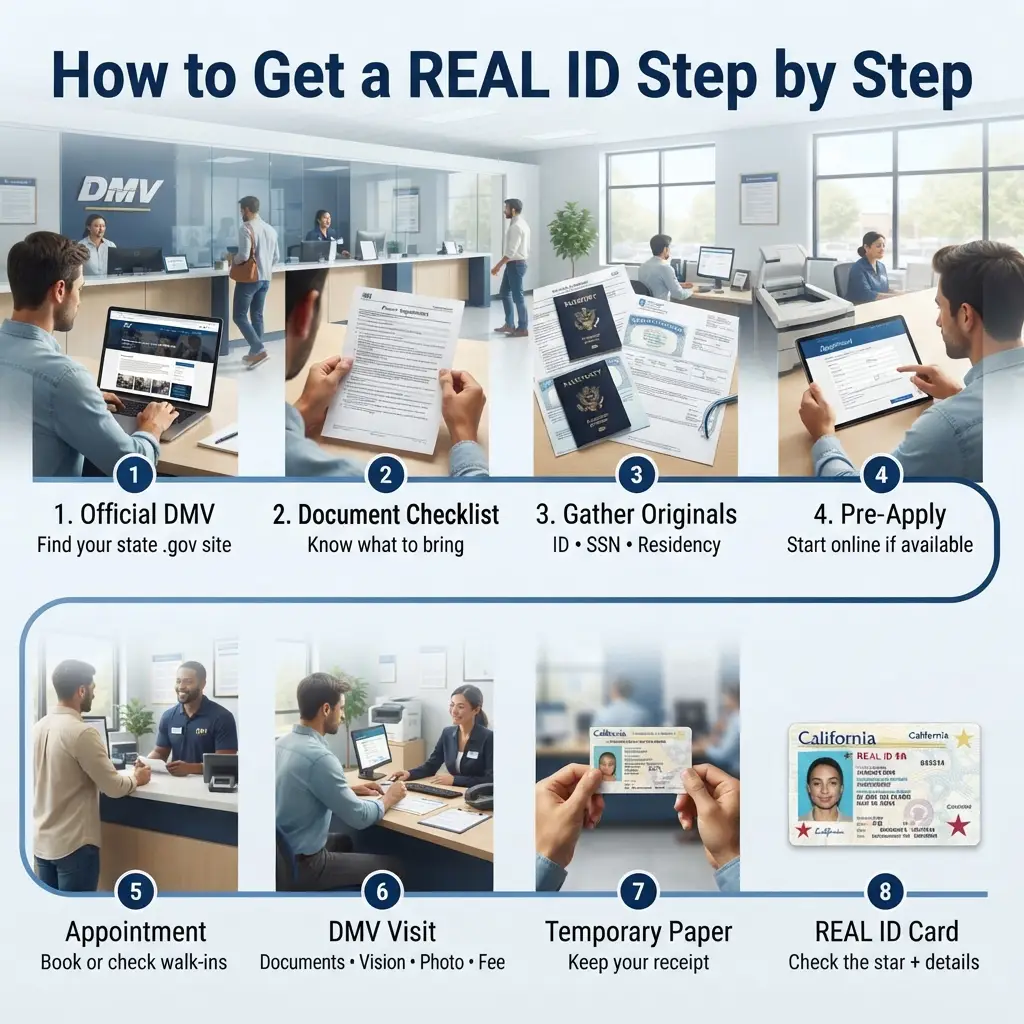
The process takes one in-person visit in most states, as long as your documents are in order. The steps below work almost everywhere, with small differences in names and layout.
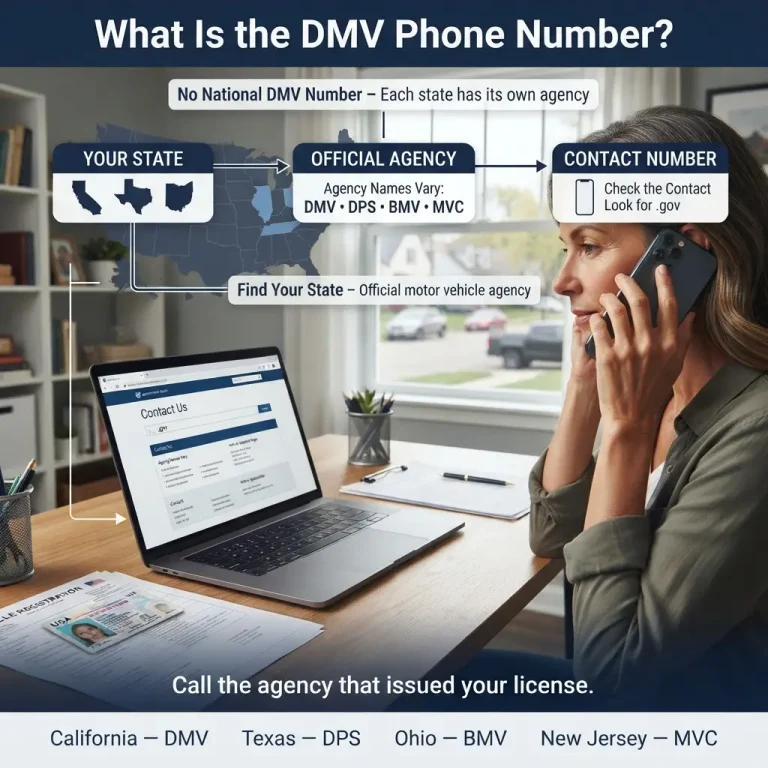
- Find your state’s official DMV website. Search for your state plus “REAL ID” and open the result that ends in .gov. Avoid ads and sites that charge extra.
- Use the document checklist. Many states have a tool that lists exactly what to bring for your situation.
- Gather your originals. Collect identity, Social Security number, two proofs of residency, lawful status, and any name change papers.
- Pre-apply online if available. Some states let you start the application and upload documents ahead of time to shorten your visit.
- Book an appointment or check walk-in hours. Our page on how to book a DMV appointment shows how to find a slot.
- Visit the office. Present your documents, take a vision test if required, have your photo taken, and pay the fee.
- Keep your temporary paper. Many states give a receipt or temporary license until your card arrives.
- Watch for your card. It usually arrives by mail in a few weeks.
- Check the star. When the card arrives, confirm that it carries the REAL ID mark and that your name and address are correct.
If you also need a renewal, do both in the same visit. Our page on driver’s license renewal explains how renewal and REAL ID can be combined.
REAL ID Fees: What You Pay at the DMV
Many states charge the normal license fee and nothing extra for the REAL ID star, but some add a fee. The cost depends on your state and the type of transaction. Getting a REAL ID at renewal often costs the same as a standard renewal, while an early upgrade or a replacement may carry a smaller fee.
| Situation | What to expect |
|---|---|
| REAL ID at your regular renewal | Usually the standard renewal fee |
| Early upgrade before renewal | May cost a replacement or duplicate fee in some states |
| New license with REAL ID | Standard new-license fee |
| REAL ID ID card (non-driver) | Standard ID card fee |
| Third-party “service” sites | Avoid, since the DMV process is not sold by outside companies |
If your state advertises a REAL ID at no extra charge, that applies to the star itself, not to every related fee. Check the fee page on your state’s .gov site for the exact amount, and avoid any site that adds “processing” or “priority” charges.
What Is the $45 TSA Fee, and Is It a REAL ID Fee?
The $45 charge is a TSA fee, not a DMV fee, and it applies only if you try to fly without an acceptable ID. Starting February 1, 2026, passengers who arrive at security without acceptable identification may pay $45 to verify their identity through a system called TSA ConfirmID. The fee does not buy you a REAL ID, and it does not replace the card.
Here is how it works, in plain terms. The fee is nonrefundable, paying it does not guarantee successful verification, and it covers a 10-day period starting on the first travel date. TSA urges travelers without a REAL ID to pay online before traveling, and anyone processed at the airport should expect delays. The agency estimates the process can take up to 30 minutes.
You can avoid the fee completely by carrying a REAL ID or another accepted document, such as a passport. The fee also applies if you forget or lose your ID on the way to the airport, so pack your document the night before. Rules and amounts can change, so check the TSA website before you fly.
There is no federal fine for driving with a standard license that lacks the star. The practical cost of not having a REAL ID shows up at the airport and at some federal buildings, not on the road. This process is similar to a standard driver’s license renewal, but with added documentation.
How Long Does It Take to Get a REAL ID?
The visit usually takes 30 to 90 minutes, and the card arrives by mail in about one to three weeks. The wait for an appointment can be longer in busy areas, especially before summer and holiday travel seasons. If your documents need extra federal checks, such as certain immigration records, the mailing time can be longer.
Do not count on a temporary paper license at the airport. Some states give you a paper document that is valid for driving while you wait, but it may not be accepted by TSA as a REAL ID. Carry another accepted ID, such as a passport, if you must fly before the plastic card comes.
Plan ahead. If you have a trip in the next month, book the DMV visit as soon as you can, or arrange to carry a passport.
Do You Need to Renew a REAL ID?
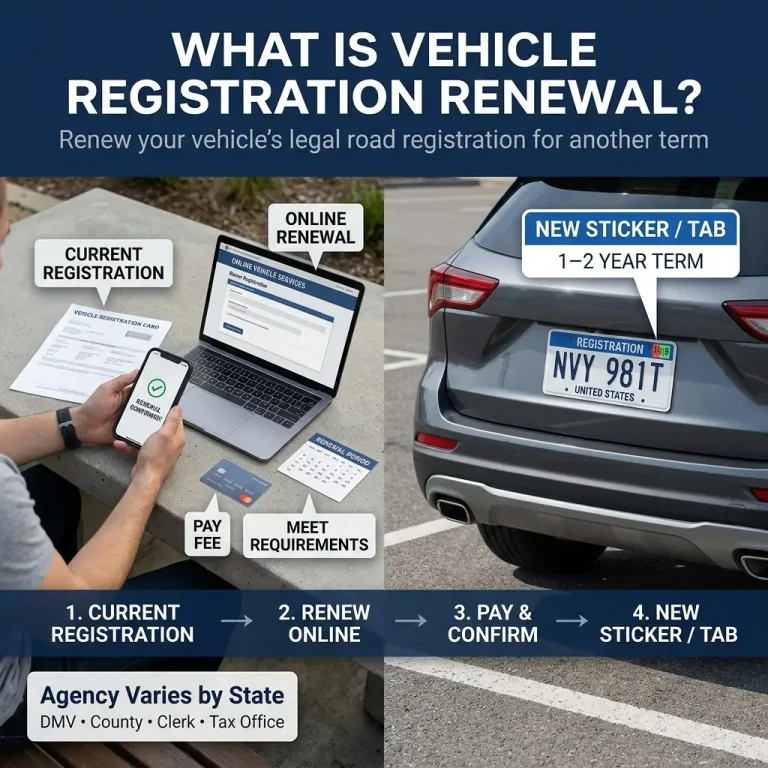
Yes, a REAL ID expires like any other license, and you renew it on the normal schedule. The star does not make the card permanent, and you must renew before the expiration date. In many states you can renew a REAL ID online, as long as your documents are on file and you meet the eligibility rules.
You usually do not need to bring all four document categories again if you renew on time and your information has not changed. If your name or address changed, or if you let the card expire for a long time, expect a visit with new documents. Our page on driver’s license renewal covers the full renewal process and typical timing.
Appointment or Walk-In? Finding an Office
An appointment is usually the safer choice, but some offices still take walk-ins for REAL ID. REAL ID visits take longer than a basic renewal because staff check each document, so many states require or strongly prefer appointments. Walk-in lines can be long, and some offices stop accepting walk-ins early in the day.
Use your state’s official locator to find an office that handles REAL ID, since not every satellite office does. If you search for a local branch by name, such as a particular town’s DMV, confirm the address and services on the state’s site, because map listings can be outdated. Our page on finding a DMV near you explains how to compare offices and check hours.
If you must go without an appointment, arrive before opening and bring every document you might need. Take an extra proof of residency and a spare payment method. A few extra papers cost nothing and can save a second trip.
Alternatives to a REAL ID
If you do not want a REAL ID, you can use another document that TSA accepts. The most common alternative is a valid U.S. passport or passport card. Other accepted items include military IDs, permanent resident cards, trusted traveler cards such as Global Entry, and some tribal and federal IDs.
Carrying a passport works only if you remember it every time you fly. A passport card is a smaller, cheaper option for domestic use, and it fits in a wallet. The TSA website lists all accepted forms of identification, and it is worth reading before your trip.
For international travel, you need a passport regardless of your license. A REAL ID does not replace it, and it does not work as a travel document abroad.
Common Mistakes When Applying for a REAL ID
Most failed visits come from the same few errors.
Bringing photocopies. The DMV usually requires originals or certified copies, not scans or photos on your phone.
Mismatched names. A maiden name, a missing middle name, or a different spelling can cause rejection. Bring the paper trail for every change.
Weak proof of residency. One bill is often not enough, and old or unsigned documents may be refused. Bring more than you think you need.
Using a PO Box. The address on your proof must be a residential street address.
Forgetting the Social Security proof. A card, W-2, or SSA-1099 showing the full number is usually required.
Skipping the appointment. Walk-in lines can be long or closed.
Using an unofficial website. Private sites may charge fees or collect your data. Start from your state’s .gov page.
Assuming online renewal upgrades the card. Most states require an in-person visit for the first REAL ID.
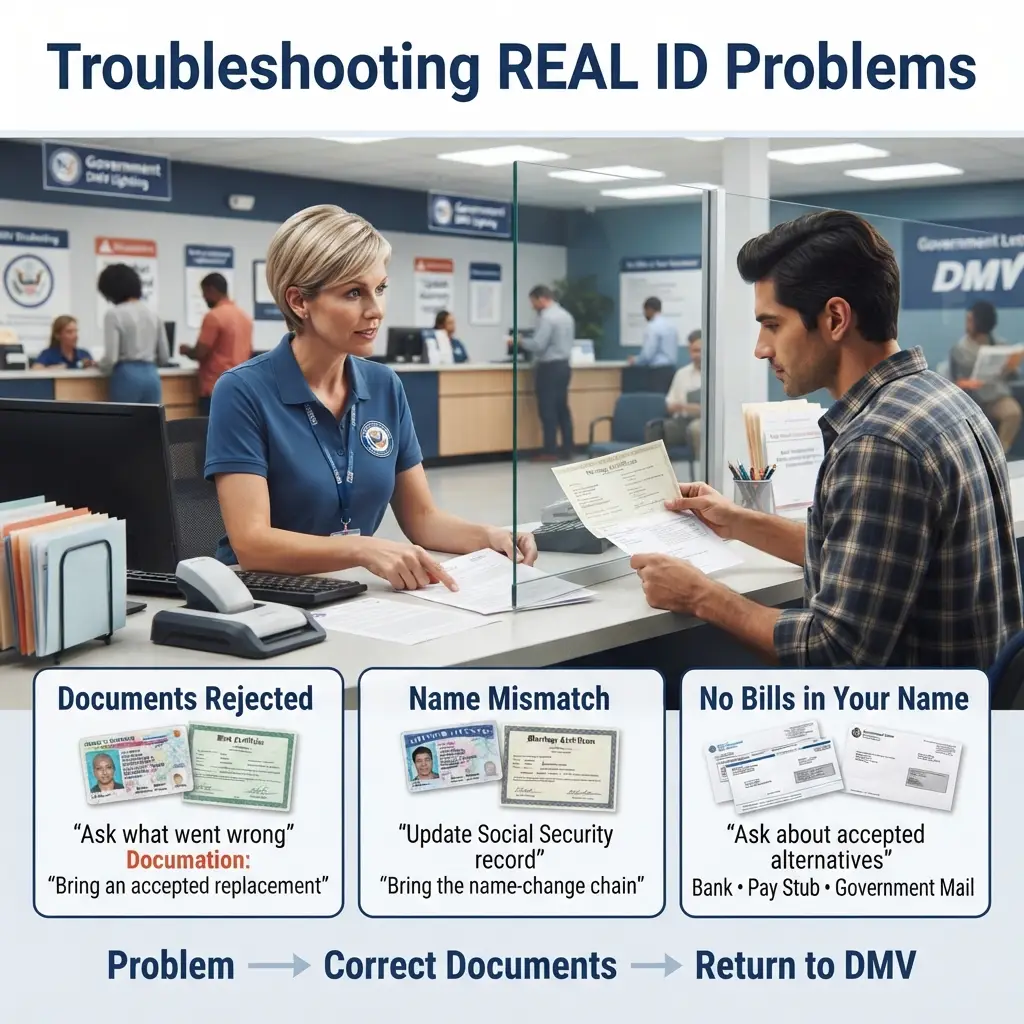
Troubleshooting REAL ID Problems
Most problems have a clear fix.
Your Documents Were Rejected
Ask the clerk exactly what was wrong, and write it down. Replace the document with an accepted one, such as a different bill or a certified copy, and return as soon as you can. Some offices let you come back the same day if you can fix it quickly.
Your Name Does Not Match
Update your name with the Social Security Administration first if it has changed. Bring the marriage certificate, divorce decree, or court order that links each name. If your birth certificate shows a different name, bring every document in the chain.
You Have No Bills in Your Name
Ask your state about accepted alternatives, such as a signed statement from the person you live with or a letter from an official source. Some states accept bank statements, pay stubs, or government mail. If nothing works, ask whether you can switch to a passport for flying.
Your Birth Certificate Is Lost or Damaged
Order a certified copy from the vital records office in the state where you were born. This can take days or weeks, so start early. A valid U.S. passport can replace it for identity and lawful status.
Your Card Has Not Arrived
Check your state’s card tracker or call the DMV with your confirmation number. Confirm that the mailing address on file is correct. If it has been longer than the stated time, ask about reissuing the card.
Your Card Does Not Have the Star
Check your receipt to see which type of card you requested. If you applied for a REAL ID and received a standard card, contact the DMV right away with your paperwork. You may be eligible for a correction without a new fee.
REAL ID Checklist and Tips
Use this list the night before your visit.
A few tips help in practice. Keep all your original documents in one folder so nothing is left behind. Take photos of everything for your own records, but bring the originals. If you are helping an older relative or a teenager, check their documents with them a week ahead so you have time to order missing papers.
REAL ID Terms Explained
| Term | Meaning |
|---|---|
| REAL ID | A federally compliant license or ID, usually marked with a star |
| REAL ID Act | The 2005 federal law that set the standards |
| Proof of residency | Documents showing your current home address |
| Lawful presence or status | Proof that you are a citizen or legally in the country |
| Certified copy | An official copy of a record, often with a raised seal |
| TSA ConfirmID | An alternative identity verification process with a $45 fee |
| Passport card | A wallet-size passport for domestic and some regional travel |
| Temporary license | A paper receipt that may not work as a REAL ID at the airport |
| Name change document | Marriage certificate, divorce decree, or court order |
| Enhanced license | A special card offered by a few states, usable at some land borders |
Frequently Asked Questions
Conclusion
The REAL ID requirements come down to four things: proof of identity, your Social Security number, two proofs of your street address, and proof of lawful status. Check your state’s official .gov page, use its document checklist, and bring originals with any name change papers. Book an appointment if you can, and carry a passport as a backup until your new card arrives.
Most failed visits come from mismatched names, weak address proof, and unofficial websites. The $45 TSA charge is easy to avoid if you carry an accepted ID, and the card itself costs little or nothing extra in many states. Use the checklist on this page, and you can finish in one visit and fly without surprises.