DMV Written Test: What It Covers, How to Prepare, and What Happens
The DMV written test is the first big hurdle for most new drivers, and it catches a lot of people off guard. The questions are not tricky, but the rules differ by state, and one wrong assumption about fees, booking, or required documents can send you home.
You will also find a study plan, test-day tips, a troubleshooting section, and answers to the questions people ask most. Since every state sets its own rules, use the numbers here as examples and confirm the details on your state’s official .gov website.
What Is the DMV Written Test?
The DMV written test is a knowledge exam that checks whether you understand traffic laws, road signs, and safe driving practices. It is usually the first step toward a learner’s permit or a driver’s license. Most states now deliver it on a computer or touch screen, so “written” is mostly a name that stuck.
People search for it in many ways, including “DMV permit test,” “DMV knowledge test,” “written driving test,” “DMV written exam,” and “written test for driver’s license.” They all describe the same exam. Your state may call it a knowledge test, a permit test, or a written exam, and some include a separate road sign section.
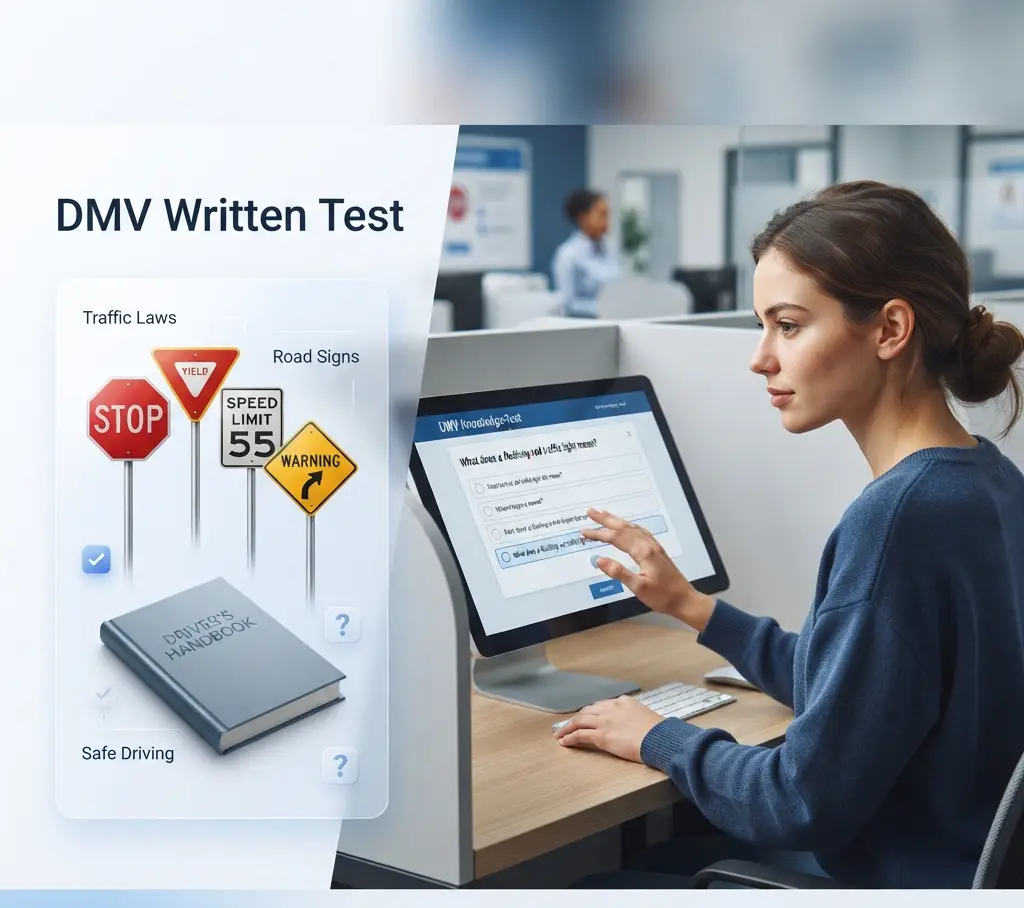
The written test is different from the road test. The written test checks what you know, while the road test checks how you drive. You normally need to pass the written test before you can take the road test, and our page on scheduling a DMV appointment for a road test explains the next step.
Who Has to Take the DMV Written Test?
Most first-time applicants must pass it, and some other drivers may too. Teens and adults who are getting a first license or permit almost always take it. Rules for other groups vary by state.
You may need to take the test if you:
If you moved from another state with a valid license, many states waive the test, but not all do. Ask before you book, since an unneeded test wastes time and money. If you are unsure whether you need to retest, call the DMV or read the license page for your situation.
What Does the DMV Written Test Cover?
The test covers traffic laws, road signs, signals, right-of-way rules, safe driving habits, and the effects of alcohol and drugs. All of it comes from your state’s official driver’s manual or handbook. If you study that manual, you have seen the material the test is built from.
| Topic | What you may be asked |
|---|---|
| Road signs and signals | Shapes, colors, and meanings of signs, lights, and pavement markings |
| Right-of-way | Who goes first at intersections, crosswalks, and merges |
| Speed and following distance | Speed limits, safe gaps, and adjusting for weather |
| Parking and turning | Parking rules, turn signals, and lane use |
| Alcohol and drugs | Legal limits, penalties, and impairment effects |
| Sharing the road | Pedestrians, cyclists, motorcycles, trucks, and school buses |
| Emergencies and crashes | What to do after a crash, breakdown, or emergency vehicle approach |
| Licensing and insurance | Permit rules, restrictions, and proof of insurance |
Some states add questions on topics such as distracted driving, seat belts, and local laws. Others split the test into parts, such as a road sign section and a general knowledge section. Read your state’s manual for the exact list.
Test Format and Passing Scores: State Examples
The number of questions and the passing score depend on your state. Many tests have about 20 to 50 questions, and passing scores often fall between 70 and 90 percent. A few examples show how much the rules can differ.
Connecticut’s test has 25 questions, and you need 20 correct, which is an 80 percent score. Maryland’s test also has 25 questions with a 20 minute limit, and a score of 88 percent or better is required. Virginia splits its exam into ten road sign questions, which must all be correct, and thirty general knowledge questions, where you need 24 correct.
| State example | Questions | Passing rule |
|---|---|---|
| Connecticut | 25 | 20 correct (80 percent) |
| Maryland | 25 | 88 percent or better, 20 minute limit |
| Virginia | 10 signs + 30 general | All 10 signs, 24 of 30 general |
| Your state | Check the manual | Check the official site |
Do not rely on these numbers for your own test. Your state may use different counts, time limits, and scoring rules, and they can change. Always check the official handbook or the DMV’s knowledge test page before you study.
Where and How Can You Take the DMV Written Test?
You can take it at a DMV office, and many states also offer an online option. Which method you use depends on your age, your state, and the type of license. Some states require an appointment, while others test on a walk-in basis.
In person at a DMV office. This is the standard route. You check in, show your documents, pay any fee, and take the test on a computer or touch screen. Some offices stop starting tests 30 to 60 minutes before closing, so arrive early.
Online. Some states let certain applicants take the test at home through an approved provider. Nevada offers the test online through an approved service, with results sent to the DMV automatically. Wisconsin lets applicants aged 15 to 17 take the Class D test online for a small fee, and a certificate of completion is emailed to take to the DMV.
By appointment or walk-in. Connecticut asks you to schedule through its online service, while Wisconsin conducts knowledge tests on a walk-in basis without appointments. Check your state’s policy, and if appointments are required, our page on how to book a DMV appointment explains the process. To find an office that offers testing, see our page on finding a DMV near you.
Online tests are convenient, but they may have rules such as age limits, a limited number of attempts, or a requirement to visit an office afterward. Read the details before you start.
How to Take the DMV Written Test Step by Step
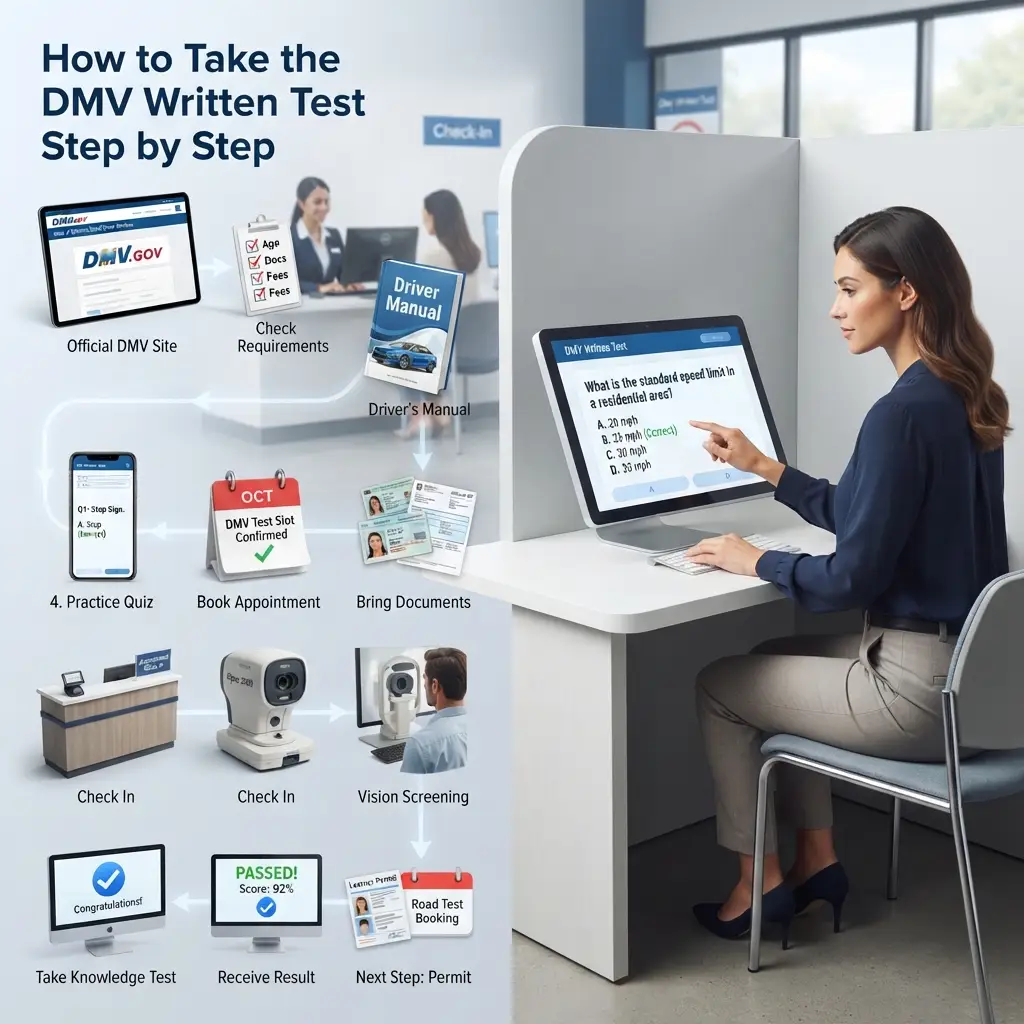
The process is simple once you know the order. These steps work in most states, with small differences in names and layout.
- Find your state’s official DMV site. Search for your state plus “knowledge test” or “permit test” and open the result that ends in .gov.
- Read the requirements. Check your age, documents, fees, and whether you need an appointment.
- Download the driver’s manual. Study the official handbook, and take any official practice quiz if offered.
- Choose in-person or online testing. Pick the method your state allows for you.
- Book a slot if needed. Use the official scheduler, and save your confirmation.
- Gather your documents. Bring identity, residency, Social Security number, and any parent or guardian forms.
- Arrive early. Check in, pay the fee, and complete any vision test.
- Take the test. Read each question carefully and answer every one.
- Get your result. Many systems show your score right away.
- Complete the next step. Pay for your permit, schedule the road test, or reapply if you did not pass.
If you also need a REAL ID, ask whether you can combine it with the permit or license visit. Our page on REAL ID requirements lists the documents you need.
What to Bring to the DMV Written Test
Bring your identity documents, proof of address, and payment, plus any forms your state requires. The exact list depends on your state and age. Missing a document can end the visit before you reach the test.
| Item | Why you need it |
|---|---|
| Proof of identity | Confirms who you are |
| Social Security number proof | Required for most first-time applicants |
| Proof of residency (often two) | Shows your current address |
| Proof of lawful presence | Required for non-citizens |
| Parent or guardian consent (for minors) | Required in many states |
| School or driver education forms | Required for teens in some states |
| Appointment confirmation | If you booked ahead |
| Payment method | Fees and card rules vary |
| Glasses or contacts | For the vision screening |
Use your state’s interactive document checklist to confirm what applies to you. Photocopies are often rejected, so bring originals or certified copies. If you are a teen, ask whether a parent must attend.
How Much Does the DMV Written Test Cost?
Fees vary widely, from free to around $40 or more, and retakes may cost extra. Some states include the test in the permit or license application fee, while others charge a separate testing fee. A few offer a limited number of tries for one fee.
Nevada charges a $25 testing fee for the in-person written test and a $10 retest fee for each retake. Wisconsin charges $10 per online test for applicants under 18, whether they pass or fail. Connecticut requires you to pay the license examination fee again to retake the test, which one source lists as $40, and Maryland says there is no fee for taking a knowledge test.
| Cost item | What to expect |
|---|---|
| Test fee | Free to about $40, depends on your state |
| Retest fee | Often smaller than the first fee, sometimes the same |
| Permit or license fee | Separate, paid when you get the document |
| Online test fee | May apply, even if you fail |
Check your state’s fee page before you go. Avoid any third-party site that charges you just to schedule or take an official test, since those sites are not run by the DMV.
How Long Does the DMV Written Test Take?
The test itself usually takes 20 to 45 minutes, and the whole visit can take an hour or more. Maryland’s test, for example, allows 20 minutes, while other states give more time or have no strict limit. Check-in, document review, a vision test, and payment add to the visit.
Plan for a longer visit if you are applying for a first license, since staff will verify your documents. Mid-week mornings are usually calmer than Mondays and Fridays. Arrive early, since some offices stop testing before closing time.
If you take the test online, you can often finish at your own pace within the time limit. Make sure your internet connection is stable and that you will not be interrupted.
How to Prepare for the DMV Written Test
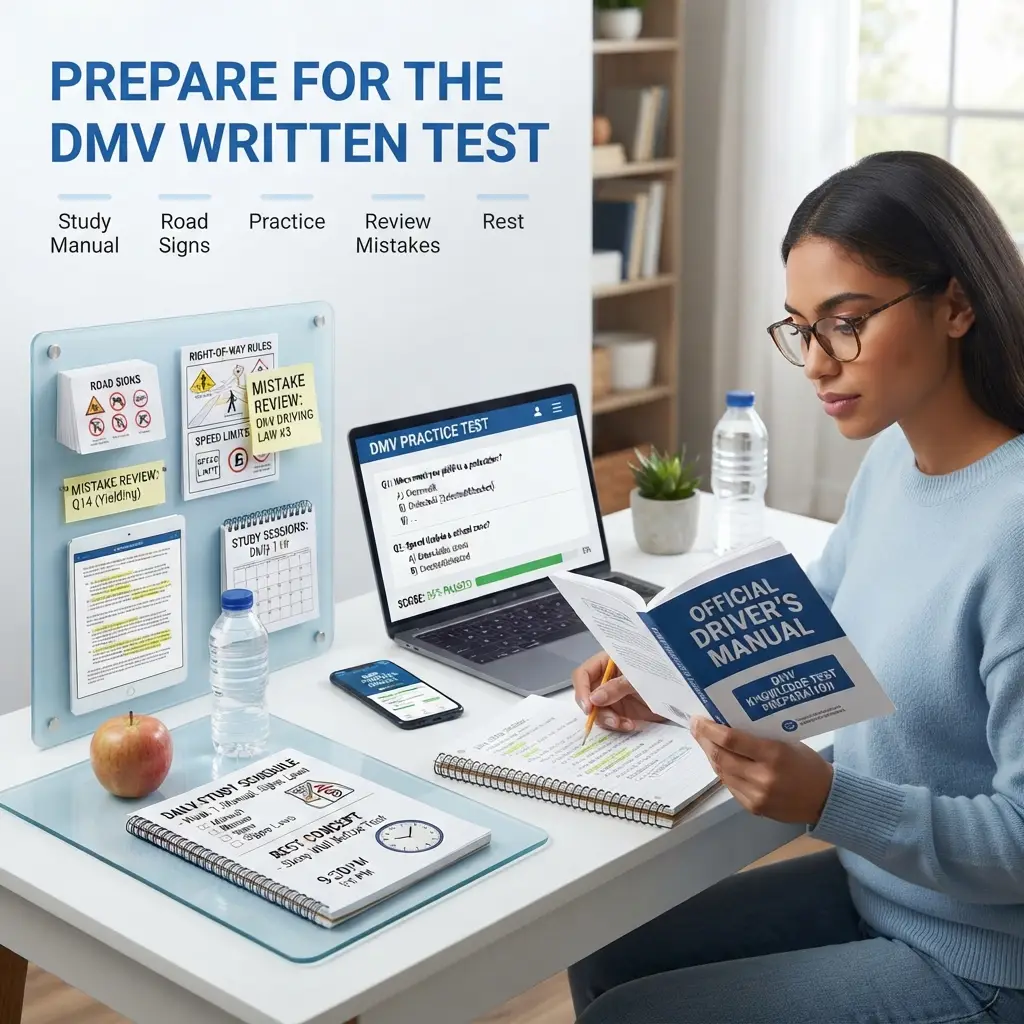
The best preparation is to read your state’s official driver’s manual and practice with sample questions. The test comes from the manual, so reading it carefully is the most reliable way to pass. A short, steady study plan works better than one long cram session.
A simple plan:
- Download the manual. Use the official PDF or pick up a copy at the DMV.
- Read it in short sessions. Study 20 to 30 minutes a day over a week or two.
- Focus on signs and right-of-way. These topics appear often and are easy to mix up.
- Learn the numbers. Memorize speed limits, following distances, parking distances, and blood alcohol limits for your state.
- Take practice tests. Use your DMV’s official practice quiz if it has one, and keep taking tests until you score well.
- Review your mistakes. Go back to the manual for each question you missed.
- Rest before test day. Sleep well and eat a light meal.
Be careful with practice sites. Many free practice tests are made by private companies, and their questions may not match your state’s current rules. Use them to practice, but treat the official handbook as the source of truth.
Test-Day Tips
A calm, careful approach helps more than speed. Most tests let you review your answers, and a few questions will be easy points. Use these habits on the day.
Tips
If you are nervous, take a few slow breaths before you start. Remember that this test is built from the manual, so your preparation counts. If you fail, you can usually try again.
Language Help and Accessibility
Many states offer the test in several languages and provide help for people with disabilities. Spanish is the most common second language, and some states offer many more. Ask when you book, since not every office has every language.
Some states allow an approved interpreter, but they may require paperwork. Nevada, for example, requires a signed attestation and an affidavit from interpreters at each test, and does not allow interpreters during drive tests. Rules are strict, so check your state’s policy before you bring anyone.
If you have a disability or need extra time, call the DMV before your visit. Many offices can provide accommodations such as a reader, a quiet room, or extended time, but they may need advance notice. Mention your needs when you schedule.
Test Results and What Comes Next
Many systems show your result right away, and a pass leads to your permit or the next step. After you pass, you may pay for a learner’s permit, get a certificate, or schedule the road test. Some states let you skip the permit if you are an adult and go straight to the road test.
Your passing score does not last forever. Connecticut says results stay valid for two years, Maryland says passing scores are valid for a maximum of six months, and Virginia requires a retest if you do not get your license or permit within a year of the knowledge exam. Keep track of the deadline in your state so you do not have to test again.
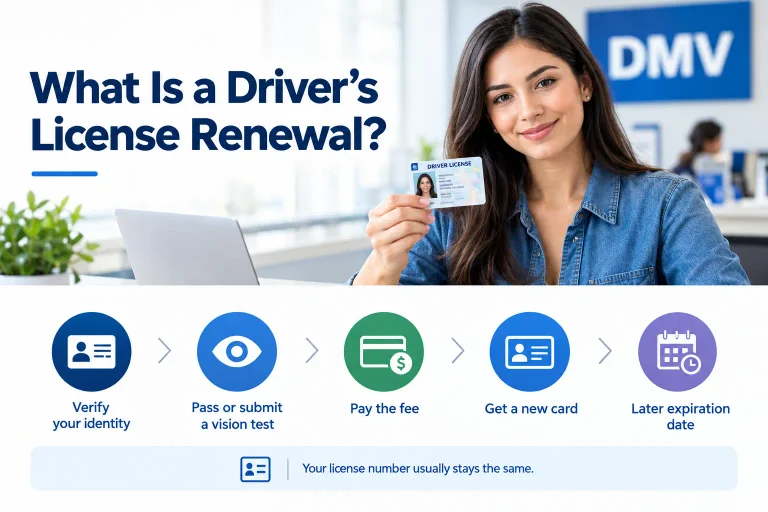
After a pass, keep your paperwork and follow the next steps. Our page on driver’s license renewal explains how licensing works later on, and our page on checking your driver’s license status helps you confirm what is on file.
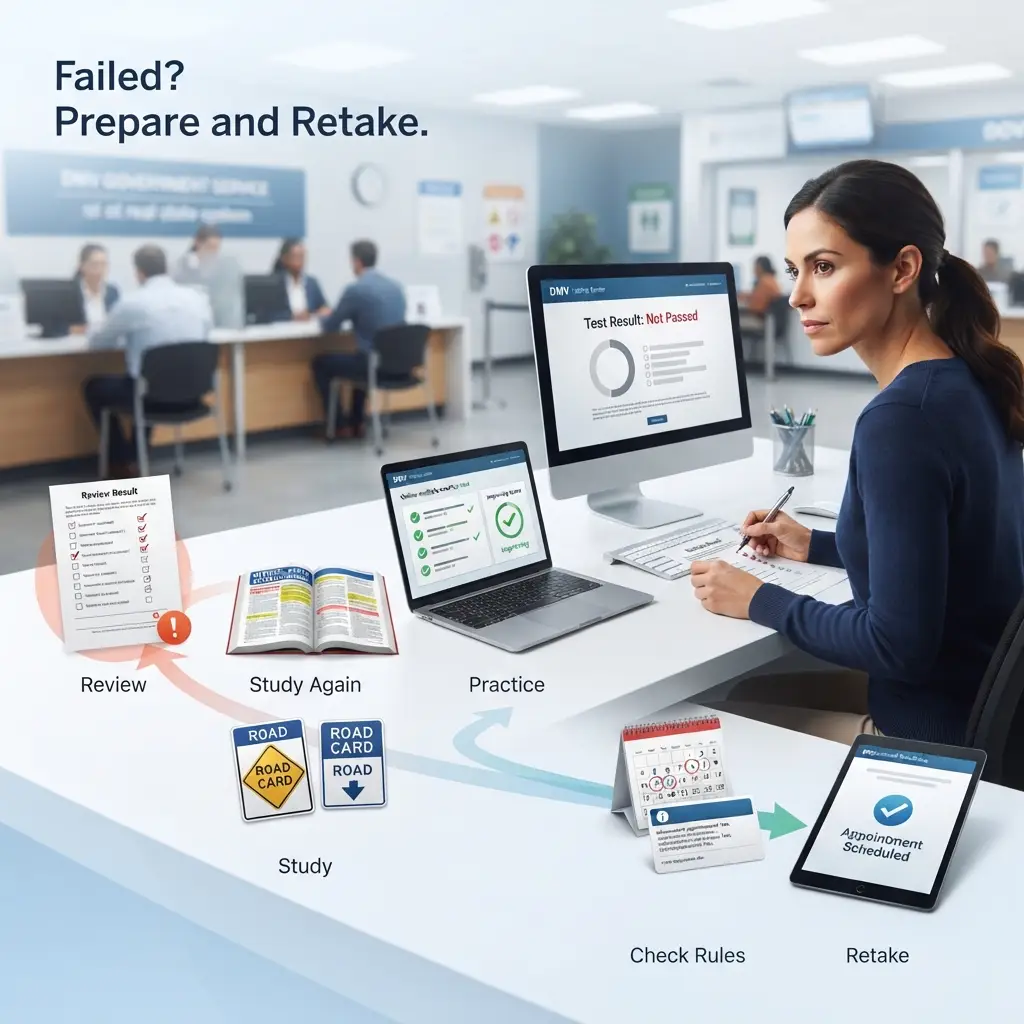
What If You Fail the DMV Written Test?
Most states let you retake it, sometimes the next day and sometimes after a waiting period. The rules differ a lot. Wisconsin allows a retake no sooner than the next day, and after five failed attempts you need special permission. Connecticut allows rescheduling right away online but requires the retest to be at least seven days later, and Virginia requires applicants under 18 to wait 15 days.
Fees and attempt limits vary as well. Some states charge a retest fee, some include several tries in one fee, and some require a new application after too many failures. In one state, for example, failing the same test three times makes the application invalid, so check your own state’s limit.
If you fail:
- Ask for your score or list of missed topics, if the office provides it.
- Review the manual for those topics.
- Take more practice tests until you are scoring well.
- Check the waiting period and fee on your state’s site.
- Book the retake, and arrive prepared.
Failing once is common. Most people pass on a second try after focused study. Do not rush back in without reviewing, since extra attempts can cost money and time.
Special Situations
The test can differ depending on your situation.
Teens. Most states use graduated licensing, which may require driver education, a parent signature, and a minimum permit period. Online testing for teens, where offered, may have age limits and fees.
Adults. Adults often take the same test, but some states let them skip the permit stage. Check whether you must hold a permit before the road test.
New residents from another state. Many states waive the written test for a valid out-of-state license, but some require it. Ask before you book.
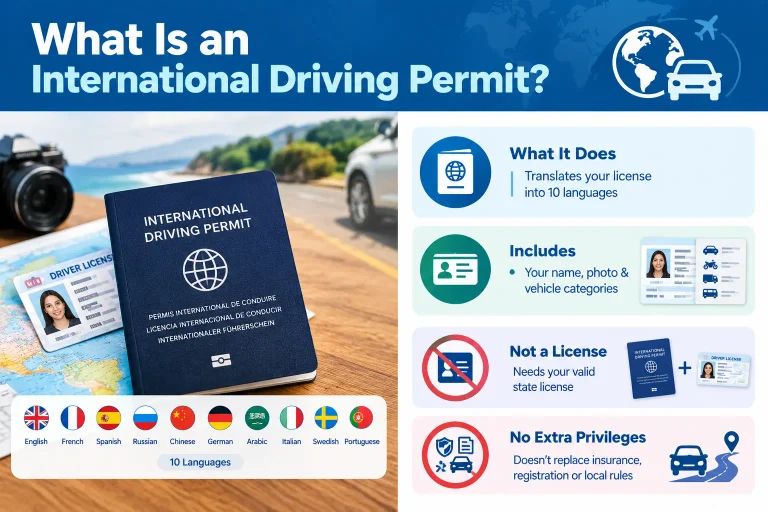
Newcomers from another country. You will usually need to take the written test and the road test, and you must show proof of lawful presence. Our page on the international driving permit may help if you plan to drive during a short stay.
Older drivers. Some states require a refresher test or a vision test at certain ages.
Motorcycle and commercial licenses. These require separate knowledge tests, often with more questions and different manuals. A commercial license requires a general knowledge test and endorsement tests.
Common Mistakes on the DMV Written Test
Most failed tests come from preventable errors.
Not reading the official manual. Practice apps help, but the test comes from the manual. Read it.
Using outdated study materials. Laws change, so use the latest edition for your state.
Mixing up state rules. If you moved, do not study a handbook from your old state.
Skipping road sign practice. Many people lose points on signs and markings they rarely see.
Rushing. A careless misread of a question can cost a point you knew.
Forgetting documents. A missing paper can end your visit before the test starts.
Waiting too long. Passing scores can expire, so plan the road test soon after you pass.
Using unofficial sites for booking. Private sites may charge extra or collect your information. Start from your state’s .gov page.
Troubleshooting DMV Written Test Problems
Most problems have a simple fix.
You cannot book an appointment. Check other offices, look for cancellations, and ask whether walk-ins are allowed. Some states test on a walk-in basis only.
You are turned away at the office. Ask exactly what was missing and write it down. Fix the problem and return. Some offices let you come back the same day if you can fix it quickly.
The online test will not start. Check your age, your state’s eligibility rules, and your internet connection. Try another browser or device. If it still fails, call the DMV or take the test in person.
You lost your internet connection during the test. Contact the testing provider and the DMV right away. Ask whether your attempt counts and how to continue.
You do not understand a question. Ask staff if you can request a language option or clarification, where allowed. Many tests do not let staff explain questions, so study the wording used in the manual.
You failed and cannot rebook right away. Check the waiting period and any online deadline. Some systems show the earliest date when you log in. If it does not, call the DMV.
Your passing score expired. You may need to retake the test. Ask the DMV whether any exceptions apply, and plan the road test sooner next time.
You are not sure which test you need. Choose the license type carefully, such as a standard license, motorcycle, or commercial. The wrong choice can mean the wrong test.
DMV Written Test Checklist and Tips
Use this list the night before your test.
- ☐ Read my state’s official driver’s manual
- ☐ Took practice tests until I scored well
- ☐ Confirmed whether I need an appointment or can walk in
- ☐ Confirmed the fee and accepted payment methods
- ☐ Gathered identity, residency, and Social Security documents
- ☐ Parent or guardian forms, if I am a minor
- ☐ Glasses or contacts for the vision test
- ☐ Planned to arrive early, before testing closes
- ☐ Got a good night’s sleep
A few tips help in practice. Study your state’s numbers, such as speed limits and distances. Take the test when you are rested and focused. Keep your paperwork in one folder so check-in is quick.
If you are helping a teen, practice together and quiz them on signs and right-of-way. Teach them the reasons behind rules, since understanding helps more than memorizing.
DMV Written Test Terms Explained
| Term | Meaning |
|---|---|
| Knowledge test or written test | The exam on traffic laws and road signs |
| Learner’s permit | A permit that allows supervised driving |
| Driver’s manual or handbook | The official guide your state uses to build the test |
| Retest fee | A charge for retaking the test |
| Graduated licensing | A staged system with limits for new, usually young, drivers |
| Road test | The behind-the-wheel exam |
| Endorsement | An added permission on a license, such as motorcycle |
| Proof of residency | Documents showing your current home address |
| Certificate of completion | A document proving you passed an online test |
| Interpreter attestation | A signed form some states require for translators |
Frequently Asked Questions
Conclusion
The DMV written test is easier than it looks if you prepare with the right material. Read your state’s official driver’s manual, practice with sample questions, and confirm the fee, booking rules, and documents on your state’s .gov site. Arrive early, read each question carefully, and answer every one.
Most failures come from outdated study materials, missed documents, and rushing. If you do not pass, review the topics you missed and retake the test when your state allows. Use the checklist on this page, and you will be ready for the next step toward your permit and your license.